Sunday, May 22, 2022

The Law Of Moses vs. the Higher Law


Today's spiritual thought is an important one. Currently, our Old Testament reading is concentrating on the Law of Moses itself, and my church teaches an interesting concept.

When Moses went up to Mount Sinai the first time, he brought down inscriptions on tablets. However, when he saw the people were worshipping the Golden Calf, he threw down the tablets, and they broke. Then Moses went up a second time and received more inscriptions. However, as my church teaches, the second set was a Lower Law, as the people proved they were not ready for a Higher Law. It wasn't until Jesus would come a couple of millennia later that we'd receive the Higher Law.

If you compare the two, the Law of Moses is long and VERY specific. It also has severe punishments. For example, Exodus 35:2 reports: "... the seventh day there shall be to you an holy day, a sabbath of rest to the Lord: whosoever doeth work therein shall be put to death."

The Higher Law spelled out by Jesus has none of the death penalties, nor a list of punishments. But rather, a set of guidelines to follow, and the rewards and punishments are more spiritual in nature, rather than physical.

In this way, my church suggests that the Lord first attempted to provide Higher Law to the people of Moses, but then when they proved themselves to be unworthy, he then provided the Lower Law, which would then prepare their descendants to one day accept the Higher Law.

If you've raised children, or entrusted something to a friend, only to see them mess up miserably, then you'd probably understand why the Lower Law was necessary. When your child or friend messed up, you probably experienced disappointment, but then you also probably didn't give up on them. You probably saw a wise way to save the situation -- thinking that the original instructions were too vague, you would probably provide much more SPECIFIC instructions going forward, perhaps not even explaining WHY, but "just do it." Then everyone learns and grows.

And what of our current environment? Perhaps we can do a little analysis, borrowing a little from math and statistics.

Every day we perform several actions. We can consider each action to fall somewhere on a spectrum between Holiness and Sin. Holiness denotes the intention to do Good and help others. And Sin denotes mal-intent, or desiring to harm others.

We can also consider each action to fall on another spectrum going from Safe to Risky. Safe acts are either benign or end up helping others. Risky acts are more likely to harm others. 

We can set up a graph with these two axes:


Suppose that we can plot each action somewhere in this framework. Holier actions appear toward the left. Sinning acts are more toward the right. Safe acts are near the bottom, and Risky acts are toward the top. It should make sense that the Safer an act is, the more likely it is to be a Good Act. And on the flip side, Risky acts are more likely to result in Bad Acts. As we study where these land in this graph, we start to see a pattern -- something like this:


A "Line of Sin" appears. Everything to the right and above this line is a Bad Act, and everything to the left and below this line is a Good Act. Ultimately, we want to help everyone stay in the Good Act zone.

Here's an example ... killing someone is clearly a Risky act. It would show up near the top. If our intent is to kill someone because we're angry, it going to be in the upper-right corner -- deep in the Bad Acts zone.

Let's say instead, our friend asks us to kill his neighbor so he can take the land and increase his own benefit. We may not harbor any ill will toward that neighbor, but we may have good intentions -- we want to help our friend. Such a killing might fall more to the upper right, but still in the Bad Acts zone.

And finally, let's say we desire to protect ourselves and our friends and family from a dangerous person. It would be better to end the one person's life in self-defense. This falls in the upper right, now in the Good Acts area (which is pretty small for the act of killing).

On the flip-side, if we're helping someone move their stuff (a pretty Safe act), we could have the worst intentions and land in the lower-right side, but still be in the Good Acts zone. Though, I've had some movers break some of our stuff -- so there's a small area to the right where these good intentions can become Bad Acts.

(Note: I realize this is grossly simplified, but stay with me) ...

Then comes the Law of Moses, which is very specific -- not much room for thinking. You do exactly what you're told. This ends up being a very Safe law. The intent is to get rid of Risky acts entirely, because ... well ... the people are just rotten, and have to be told everything down to the letter, because they just can't take care of themselves.

So, it looks like this:


The Law of Moses allows all acts below the dotted line. Thou shalt be Safe! If you go above the line, you'll be punished.

Pros: Most of the allowed acts will end up being Good (below both the Law of Moses line and the Line of Sin). And look to the right above the Law of Moses and the Line of Sin. There are a large number of Bad Acts that are AVOIDED. This is the goal of most punitive laws. Protecting people from themselves.

Cons: There is also a section to the lower right, above the Line of Sin but under the Law of Moses line. These are acts that because of bad intentions, may actually cause harm, but are still allowed under the restrictions of the Law of Moses. But this area is very small, because the Law of Moses is so Safe. Some people may call this area a Type I error -- a term used in science and statistics. 

But -- sadness -- check out all of the Good Acts above the Law of Moses and under the Line of Sin. These are wasted Good Acts, lost opportunities to help others. Life isn't as great as it could be, because no one is ALLOWED to do these acts. Some people may call this a Type II error. (Or this might be Type I and the other one is Type II, depending on how you define each type.)

The Law of Moses implies that is worth giving up these wasted Good Acts to keep the Type I error low (at the expense of Type II errors).

Around the time of Jesus, leaders of the Sadducees and Pharisees added more interpretations and punishments, which effectively lowered the line even further, making the Law Safer, while increasing Type II error.

Jesus demonstrated the drawbacks of this when he healed the sick on the Sabbath. In the new Law, healing was considered to be working, and so these acts of Jesus were forbidden. He was signaling intentionally that there existed some Type II Good Acts that were forbidden that should be allowed.

So, what would happen if we were to draw the horizontal line higher? Could that help us out? It would give us a Higher Law, like this ...


Note that this isn't THE Higher Law given by Jesus, but rather some other hypothetical law that's more permissive and fewer punishments. The line is just drawn higher.

Pros: It gives us access to most of the formerly wasted Good Acts. This means higher potential for us to do well and benefit our society. Look at how much larger the lower-left section is. Also, in the upper-right section, we are still somewhat protected from some of the riskier sins.

Cons: There is still a small section of wasted Good Acts in the upper-left corner. And -- wow -- that opportunity to sin in the lower-right is pretty large -- and with no punishments?

This Higher Law provides more AGENCY, which allows for more sin. It implies that it's better to allow us to have more opportunities to do Good -- reducing Type II error (at the expense of Type I).

Now -- try this experiment. Can you find a better place to draw the horizontal line? Perhaps in the very middle? Then Type I and Type II errors would be the same. Is Type I or Type II better to allow than the other?

If only there were some way to eliminate Type I and Type II errors entirely. Turns out, there's a simple solution:


Don't draw ANY horizontal lines. Instead, draw that line diagonally -- right on top of the Line of Sin. And this is the Higher Law given to us by Jesus. No more punishments. Maximum free will. We are in charge of our own actions and consequences. And no more Type I and Type II errors.

The only drawback ... it's a much more difficult concept to explain. We must all individually learn where that diagonal line is. We must learn the correct principles so we can discern for ourselves whether a particular act is Good or Bad.

This was too difficult a concept for the people of Moses. So, they got the Lower Law. Hundreds of pages of cans and cannots -- everything spelled out.

So what do you think? Is it better for us to have a Law of Moses? Or the Higher Law? Do we need to be protected from our sins? Or is it better to have full free will? What have I messed up in this analysis? Comments are welcome.


Sunday, May 1, 2022

Would You Be Found Guilty of Being a Christian?


As I vacationed across the states, I attended a ward in St. George, Utah, and enjoyed a very interesting priesthood meeting session. The main gist of their message stemmed from this popular quote:
If you were accused of being a Christian, would there be enough evidence to convict you?
The comments that ensued were definitely enlightening -- a lively discussion. Some good ideas were floated around, but in my own opinion, they had failed to hone in to the one evidence of Christianity that trumps everything else.

Though, I think the teacher had started the discussion well and came closest to the answer -- talking about our life stories. In fact, at first, I had thought the lesson was on writing in our journals or writing our own "story" for family history purposes. But then halfway through the lesson came the grab-me-gotcha.

The teacher said: if it were our funeral, and the people were examining us, would they find evidence that we had been Christian? He then asked: what are some of these evidences they would find?

The discussion then seemed to center around some kind of forensic evidence -- as if there were a chalk drawing on the floor of the deceased's house, and investigators were combing through all the belongings. What would they find?

One person answered: There's got to be a Bible (or Standard Works, which includes the Book of Mormon). That got some praise.

Another person answered: Yeah, but does that Bible look brand new? Or does it look like a well-used book? Even more oohs and aahs.

I must admit, my set of Standard Works, gifted to me when I was a child, is falling apart. It's all marked up, and I must turn the pages carefully. It's survived my mission, and many study sessions after that. A few years ago I had lost the set at church, which caused sadness for the space of a month, until we found it in the Lost and Found. After that, I decided to use the phone scripture app and leave my fragile set at home.

So, is a like-new Bible really evidence of not being a Christian? What if a person prefers reading online?

But then again ... is Bible knowledge evidence enough? The priests and religious leaders at the time of Jesus had outstanding knowledge of scripture, but they still misunderstood Jesus' message. They had become hardened by their own knowledge, unable to accept the very Messiah they had been seeking.

Also, certain evil spirits who had possessed a person had perfect knowledge of who Jesus was, but that knowledge by itself didn't save them from their fallen state.

Another person in class spoke up: what about an active temple recommend? Lots of oohs and aahs on that one! In order to receive such a recommend, one must be able to answer a set of worthiness questions -- typical evidence of living a Christian life. But, having a recommend doesn't mean someone is actually using it. And how easy it is to answer: Yes, yes, yes, no, yes, yes, yes, yes, yes, yes -- and possibly even one or two "I'm working really hard on that"s.

One may even bring up the existence of a cross. But it's still the same issue. One can have a cross, but not believe in it.

So what's the answer? What is the ultimate evidence of being a Christian? The Bible tells us clearly what the answer is ...

OUR ACTIONS.
And I saw the dead, small and great, stand before God; and the books were opened: and another book was opened, which is the book of life: and the dead were judged out of those things which were written in the books, according to their works. (Revelation 20:12) 
See -- it comes back to our stories. How did we treat other people? Did we actually follow the teachings of Jesus? Or did we simply believe and do nothing? (Faith without works is dead.)

And yeah -- it seems like I went a roundabout way of coming to this answer in this post. But I think it's important to point out all these items because ... (here comes my own grab-me-gotcha) ...

In my own recent observations, I have witnessed the well-intentioned propagation of Christianity and its principles fall flat on the general public. I, like most other Christians, would be delighted if everyone were to join us and help make this world a better place. But more often than not, I see my fellow Christians relying too much on EXPLAINING what it means to be Christian and what the evidences would be, rather than SHOWING what it means through our own ACTIONS.

The reaction from the general public seems to be more and more negative. To them, we are PUSHING our religion. We're trying to install a Christian Law upon the land (at least here in the states). Some see this as an attempt to establish a state religion -- an affront to religious freedoms, the First Amendment, and even my church's eleventh article of faith.

And the worst part, they see many of us who profess to be Christian who then perform ACTIONS not in harmony of basic Christian principles. In other words, others see us as hypocrites. They see our exclusion of certain people and other religions, even though Christ invites us to welcome ALL. They see how we treat our children who don't agree with us, even though Christ teaches that what we do unto one, we do unto Christ. They see our zero tolerance of opposing viewpoints, when Christ invites us to eschew conflict. And as a result, others ironically find us GUILTY of being CHRISTIAN -- as if it were some evil scourge among the land that needs eradication.

I get it. Satan is stirring up the hearts of men to fight Christ's Church on earth. It's prophesied that this will happen in the last days. But many of us are unfortunately giving Satan the evidence he needs to turn the hearts of the people against us.

The solution? Simple -- start ACTING the religion instead of PUSHING it. Most people convert when they see good examples to emulate.

Do we TELL our friends how the world should be; or do we SHOW them? Do we have civil discussions with those whom we disagree; or do we instead tell them they're going to hell? Do we unite with others to help the vulnerable during times of crisis; or do we resist under the guise of "freedom"? Do we welcome others who are different from us; or do we expect them to change in order to be our friends and associates?

Or in other words: are we "GUILTY of being CHRISTIAN" in the way that we're torturing others? Or are we rather showing enough evidence in our ACTIONS to show that we're LIVING Christian lives and enticing others to join through our EXAMPLES?

I invite to consider these things and decide for yourself. Are we going down the right path? Are we LIVING the religion? Will our ACTIONS lead to a desirable judgement? Are we helping others WANT to join the Church?

It's ultimately up to each of us to decide how to proceed, and I wish you all well.

Thursday, April 7, 2022

Saints: Volume 1


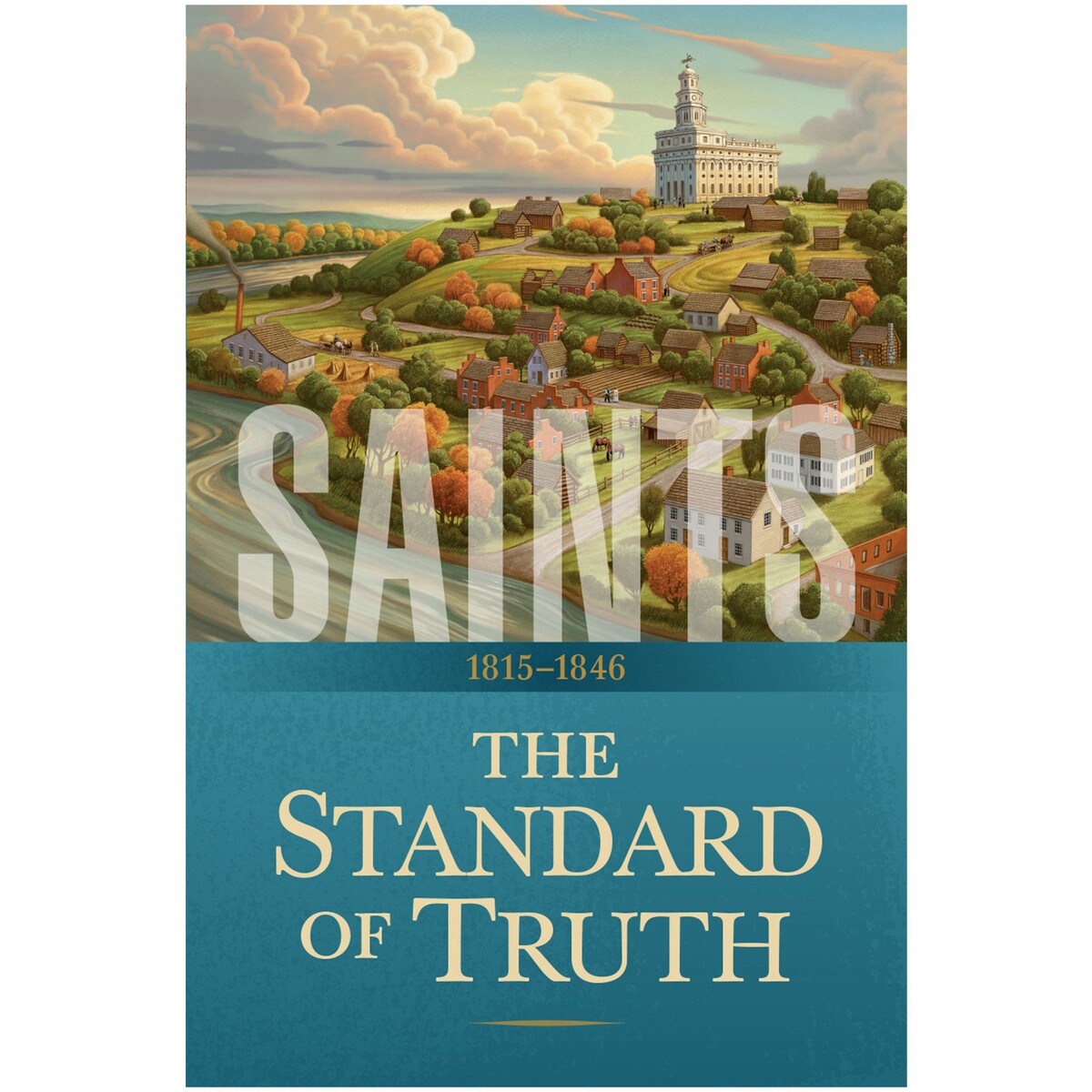
Last year, I started reading Saints: The Standard of Truth (Volume 1), as it went along with our assignment for 2021 to read the Doctrine and Covenants.

I suppose it was exactly what I expected to be -- a narrative easy to read that would nicely complement our reading of scripture and Church history. (As a reminder, this is the Church of Jesus Christ of Latter-day Saints.)

This book provides early Church history, and explains the backdrop for all the modern day revelations. I believe every section of D&C is covered. 

One funny thing to mention, though, is that if you do read this along with the D&C, the coverage, time wise, is somewhat lopsided. This is no fault of the book itself, but just the way it is. A lot of the earlier sections of the D&C happen over a short amount of time. One chapter in Saints can cover several sections of the D&C. After about 1835, it flip-flops. The D&C sections become much more sparse, while several chapters pass in Saints. As it was, I ended up finishing this book around February though we were done with D&C on Dec. 31.

The book covers events up through 1846, starting with Joseph Smith's early life, establishing the Church, gathering more Saints (members of the Church), moving to Ohio, then Missouri, and lastly Illinois, covering all the persecutions from enemies and even disgruntled prior members -- leading up to the martyrdom of Joseph Smith, and extending a couple of months after that as Brigham Young evacuates Nauvoo.

I probably already knew 80% of what's in the book -- or at least the main stories. But there was a lot of new material I had never heard before, in particular the true stories of individuals living within the main story line. It includes some of the mistakes the Saints made along the way -- even explaining how some of their actions may have exacerbated their own persecutions. I also learned some more detail surrounding the martyrdom of Joseph Smith, including how Governor Boggs' baseless claims landed him in jail, how Joseph and company came to be armed, how the first murder attempt was thwarted (yeah -- I didn't know there was a first attempt), and other interesting details.

At the same time, the narrative remains light. I don't know if you read the New York Times newsletters, but it's like that, giving light details, and then providing links (footnotes) for anyone to go and get much more detail. Sometimes I found myself frustrated, because I wanted more -- and sometimes I got confused with some pronoun usage -- where I wasn't sure who was doing what. I would have been perfectly happy with a slightly higher level of detail.

The writers did their best to keep events in chronological order. Though sometimes the story warranted going back a little to maintain flow. Then again -- some stories were split into several sections spread out over several chapters. Often when an earlier story line picked up again, I would have some trouble remembering what had happened before -- and I ended up wishing that that particular person's story was told in one chunk instead of being spread out in five chunks. It does effectively give the sense of how many developments were happening at the same time -- how some events were independent while everything was still tied to their overall successes and struggles.

I recommend this book to people not of my church, as it provides an excellent light-reading introduction. It tries its best to present multiple sides of the story, though you should know going in that it's clearly biased. This is because it's ultimately produced by the Church, itself. As such, it's available for free download from several different outlets. (I believe I downloaded my copy from Amazon for free.)

And the biggest plus for this book -- an amazing amount of research. It's worth reading just for the introductory information it provides. There's also a Volume 2 that carries through 1893. I'll start reading that sometime in the next couple of years. Volume 3 will come out shortly, taking us to 1955. And the final Volume 4 will take us to the present. Eventually I'll read the whole series.

If you'd like to learn more -- just pick up a copy, and start reading.

Sunday, March 13, 2022

The Families of Abraham


Our Old Testament reading continues. Following the schedule, we are nearing the end of Genesis. This last chunk covers Abraham, his family, Isaac, Jacob, and we've even started learning about Joseph and the other sons.

So let's see. Quick summary ... it starts with Abram (descended from Noah), who marries Sariah. God promises to bless his seed, and changes Abram's name to Abraham. And Sariah becomes Sarah. (Just drop some letters?)

Sarah can't have children, so she gives her handmaiden Hagar to Abraham to wife. Then Hagar gives birth to Ishmael. As Ishmael grows older, Sarah starts to do despise him and Hagar, so she ends up kicking them out.

Then Sarah gives birth in her old age to Isaac -- a miracle. Isaac receives the promised blessing from his father. Ishmael also grows to be a large nation, many of which are Muslim today (Muhammad is believed to be descended from Ishmael).

Isaac marries Rebekah, and they have two twin sons: Esau (redhead) and Jacob. Esau comes out only a few minutes before Jacob, so he gets the birthright. But later, Jacob, with some help from his mother, take the birthright, and Jacob ends up with the Abrahamic blessings.

After wrestling with God, Jacob's name changes to Israel. And then he has 12 sons through four different wives -- making up the future 12 tribes of Israel.

Some random thoughts (in somewhat chronological order):
  • The Old Testament can be surprisingly R-rated. People sleeping with each other, killing, cheating, and the like.
  • The Bible says: "thou ... shalt call his name Ishmael." (Genesis 16:11) So, where's Ahab?
  • At least twice, Abram and Sariah plan to say that she's his sister so that the people don't kill Abram and take her away. Both times, some kind of king takes Sariah, and then in a vision they learn that she is married and God threatens to curse them. And they return Sariah and ask, "Why did you say that she's your sister?" In the second story, there's a plot twist -- turns out Sariah really *IS* his sister -- from another mother. So, cool.
  • Evidently -- after Sarah dies, Abraham marries again and has more children.
  • Isaac ends up marrying his cousin, Rebekah. In a few generations, the idea of Levitical degrees will be introduced. But it seems that at this point in time, this type of thing is permitted.
  • Laban, the father of Rachel, is a jerk. He probably would have kept Jacob as a "slave" forever. At least Jacob got two wives out of it.
  • After twenty years, Jacob feared when he heard that Esau, his brother, was on the way to meet him. Turns out that he just wanted to say hi, and there were no more hard feelings.
  • Judah is such an interesting person.
Trying to get a spiritual thought out of this ... sometimes it takes most of my energy just to get the stories straight. Sometimes I get distracted by all the human imperfections. But still -- these sections are filled with some good parts -- covenants, promises, miracles, blessings for those who follow God, and not so much for those who don't. With God, nothing is impossible. If we do our parts, God will keep up his end of the covenants we make.

Up next -- we're about to get to Moses and his story. Should be fun!!

Sunday, February 6, 2022

The Generations From Adam to Noah


For today's spiritual thought, I'm going to do what I do best -- Math! Sounds spiritual? Perhaps. All things to God are spiritual.

What I did was to take the numbers of Genesis 5 and throw them into a spreadsheet, just to see how things came out. To get a better look of the results, you should double-click the chart above to open a larger version in a new window. Year zero marks the beginning of Adam's life (I'm guessing when he got kicked out of the garden of Eden). And then I go from there.

For example: Genesis 5:3 tells us that Adam was 130 years old when he begat Seth. And then Genesis 5:8 tells us that Seth lived a total of 912 years. So, on my chart, Seth's line goes from 130 to 1042. And so on ... all the way through Noah.

As a bonus, I marked when the flood occurs. Genesis 7:6 tells us Noah was 600 years old when the floods came, so as per the math, this happens in year 1656.

Now armed with this chart, we can attack a myriad of questions. For starters, why does the Bible say that these people lived over 900 years? Methuselah has the longest life span of 969. As such, I've seen several works of fiction refer to "Methuselah" as some device or project that gives eternal life. Enoch has the shortest of 365 because he "walked with God."

But then after the flood, life spans decrease drastically. Could it be some kind of math mistake? Surely those recording the numbers could correctly identify the seasons and count the cycles. Some suggest that perhaps they were counting months instead of years. If we divide by twelve, Adam only lives to be 77 years. But then he's 10 years old when he has Seth. Well -- I suppose he was already grown.

But wait -- Seth would have been 8 years old when he had Enos. That doesn't make sense.

It also doesn't make sense to us that all these people would wait so long to have children. Tied for the youngest are Mahalaleel and Enoch who were both 65 when they had their mentioned child. Most women today are unable to bear children at 65.

So, perhaps we don't divide by 12, but by some other magical number to adjust the generations? Well, let's take Mahalaleel and say he really had a child at 16 (reckoned by our years). That provides us a factor of 4. But Mahalaleel, after this adjustment, is still living 223 years. So basically -- yeah -- there doesn't exist a factor or adjustment that gives us both a believable time for giving birth, and a believable time for death.

Plus, check out that dotted line at approximately year 927. There are NINE generations alive at the same time! Has that happened even once to any family in any of our secularly recorded history? I picked 927 because Doctrine and Covenants 107:53-57 describes a time (three years before Adam dies) when Adam gathers together the generations listed above from Seth to Methuselah, and blessed them. I note that Lamech was supposedly alive at the time, but was perhaps not old enough to be a high priest?

And get this ... Lamech dies just a couple of years before the flood hits. And Methuselah? He dies the same year as the flood. What? Did they forget to bring him on the ark? Did he go bad in the end? Poor Methuselah! (Perhaps God waited for him to die before releasing the flood waters?)

And lastly -- one more concept. Genesis 5 lists only one son for Adam, and that was Seth. But we know that Cain and Abel were born before that. And Genesis strongly suggests that there were many children born prior to Cain and Abel -- otherwise, who were those other people Cain went off to and got married? The Joseph Smith translation of Moses also seems to indicate that many were born before. Moses 5:2 states they bare sons and daughters. And then verse 16 mentions Cain. And then Abel comes in verse 17.

So, there's no reason to believe that each child in that lineage was necessarily the first born. It could be that Cain and Abel were mentioned above the others because they were the first murder to have occurred.

So -- why is Seth mentioned over all the thousands of other children Adam may have had? And then why Enos? And then why Cainan? Simplest answer -- there's only one lineage that takes us to Noah. Some call this the "righteous lineage." Perhaps each person in this lineage was particularly more "righteous" than his brethren, and thus more likely to pass on righteous teaching to their children.

And again -- all of these numbers could have been made up after the fact or corrupted through oral traditions. Either way, it was fun to make this chart. Enjoy!!

Sunday, January 16, 2022

The Fall of Adam and Eve


Looks like I have a lot to say this first part of the Old Testament. You get another blog post (but don't worry -- the Elders will be back soon). This time it's about Adam and Eve.

Judaism, Christianity, and Islam seem to have the following points in common concerning the "Fall":
  • Adam and Eve were living in the Garden of Eden in a perfect state. That is, no sickness, no death, etc.
  • Adam and Eve were innocent -- meaning they had no knowledge of evil.
  • God planted the Tree of Knowledge of Good and Evil in Eden and provided two commandments: Be fruitful and multiply AND do not partake of that fruit. Eating the fruit meant they would die.
  • A serpent tempted Eve to partake of the fruit.
  • Eve then got Adam to partake.
  • God appeared, cursed the serpent, and casted Adam and Eve out of the Garden.
  • Then death, pain, evil, and all kinds of other bad things came into the world.
But when you look closer at each religion there are a few subtle but very important differences. 

Most Christian denominations see this as the "Fall" of Adam and Eve. All they had to do was to NOT partake of the fruit -- one simple task -- and then we would all be living happily with no sin and death. It would be a wonderful world. But Adam and Eve messed it all up, so now we must all suffer. Jehovah's Witnesses even go so far as to say that Adam and Eve are permanently dead (as punishment) and will not be resurrected because of this direct disobedience to God.

But then the Book of Mormon and the Doctrine and Covenants of my church sheds more light on the subject. 

First off, let me ask you a question. Have you ever wondered why God placed the Tree of Knowledge of Good and Evil in the Garden? We'll call this the Knowledge Tree. I must be specific here, because God placed that other tree as well: the Tree of Life.

It seems that if God had really wanted no one to partake of the Knowledge Tree, He could have simply NOT put it there in the first place. Then there would be no temptation, and we would all be living happily.

Before I continue, I must share that once when I asked this question, someone accused me of being blasphemous for questioning God's motives and for even suggesting that God makes mistakes. Needless to say, that particular discussion pretty much ended there. But I do not ask this question in an attempt to prove God is fallible and unreliable, but rather I'm simply asking the question so that we can have a better understanding. If we hold to the assumption that God cannot make mistakes, then asking the question helps us to better understand the true purpose behind what He did.

Taking this a little further, let's say Adam and Eve never partake of the fruit, and then there are millions of progeny running around without sin. All it would take would be just one person to eat that fruit, and it would unleash death on everyone. As an actuary, I can calculate the odds of someone eating the fruit, and with millions of people having access to it, those probabilities are very high .... more than 99.999999999999999999%.

I naturally come to the conclusion that since God placed the Knowledge Tree on Earth, and since God doesn't make mistakes, He was planning for someone, somewhere, at some time to eat that fruit. It therefore seems to be an important piece of His plan. He knew exactly what was going to happen, and He was ready for it.

And that's what my church teaches:
  • Partaking of the fruit was necessary to instill the knowledge and ability of procreation.
  • Partaking of the fruit opened the door to two deaths: Physical Death and Spiritual Death.
  • There must be opposites in all things. You can't have true joy unless you understand sorrow. Likewise, you really can't be good unless you have knowledge of evil.
  • Humans are here on Earth to be tested. This requires the knowledge of good and evil to enable us to make decisions.
  • The first great decision was deciding which of the first two laws to follow: Procreate, or refrain from eating the fruit? They couldn't do both.
  • Death and all the other bad things in life give us experience and help us to become better people.
And then come my thoughts. Who wouldn't want the knowledge of good and evil? Satan actually asks this question as he tempts Eve -- and well, the master of lies is adept as using truth as part of his tactics. His goal was to bring evil into the world so he could have a measure of power. But I must admit -- isn't knowledge always a good thing?

Think of a little toddler -- all innocent and cute with no real knowledge of what's good and what's bad. How many times have you seen a toddler do something bad (like punching a sibling) without fully understanding what he was doing? Having no knowledge of good vs. evil does not stop a person from committing evil. Rather, the person is free from any judgement -- because they didn't know any better.

Likewise, Adam and Eve, in their perfect state, were free to do anything they pleased. But without the knowledge of good and evil, they could perchance perform evil acts as well -- because they wouldn't know any better. What would stop them and their progeny from committing adultery? Or from stealing? Or from hurting others? Avoiding these acts is impossible without knowledge.

It's kind of the age-old paradox: would you rather know what you're doing wrong, so you can stop doing it and be happier? Or would you rather not know that it's wrong so you never feel bad about doing it? From above, it appears much more desirable to have knowledge so you can increase your happiness in the end. In other words, making good decisions with knowledge, to me, is preferable over living in ignorance.

That's why I think the following (which I never noticed before until today): What if God placed the Knowledge Tree there intentionally because he wanted humans to have the choice to partake? Kind of like a contract. Adam and Eve knew beforehand what the stakes were. God told them what the tree was: eating of the fruit would give them very valuable knowledge, including how to have children. But it would come with a price: death, sickness, being cast out. They could have chosen NOT to partake, and they would have lived alone for an eternity in the Garden, living peacefully, but missing out on the bigger blessings now available to all of us.

But, they ultimately decided to partake. Perhaps they saw both the benefits of the knowledge and the price and decided it was worth it. We also have no idea how long it took them to make that decision. Were they millennia in the Garden before the Fall, or was it just one hour? We don't know, but then again it doesn't matter to us. We are in the state we are in now, and we can do our best to return back to Him, through Jesus' redemption for us.

So, there you have it. A summary of what my church believes, how it defers from most denominations, and also my additional thoughts. I hope you've enjoyed these ramblings, and as always, you can let me know what you think.

Sunday, January 9, 2022

Does God Know When We Are Going to Die?


I know -- I've already done a spiritual thought for the month, and I need to get back to the second "Elder Elder and Elder Benjamin" story. But I feel impressed to share this important thought from my reading this past week.

Over the past year, in response to the pandemic, I've heard the religious say things such as: "My days are numbered, and God knows when I'm going to die" or "if it's my time to go, then it's my time" or even "I do not need to fear because I can trust in God and He will protect me -- unless it's my time to go."

It's given me much to think about over this past year or so. Does God know when I'm going to die? Of course -- if He's omniscient, then He knows everything -- including when I'm going to die. So, to answer my big OP question simply, the answer is: Yes. He knows when I'm going to die.

Often in the Bible, the concept of "your days are numbered" is usually coupled with the idea of "the Lord will protect you, so do as He commands." For example, Jesus tells the apostles in Luke 12:7, "But even the very hairs of your head are all numbered." In other words, "go and do what I command you and I will protect you."

Is this day of death set, then? In other words, has God determined that I'm *supposed* to die at a particular time? Will I be called to an already specified mission when I die? And so on...

In the Calvinistic tradition as I understand it, predestination dictates that, yes ... that date is set, and there is absolutely nothing we can do about it. We can only make the most out of our life until that day comes.

But then, the Bible gives us some interesting clues, such as in 1 Kings 3:14, when the Lord speaks to Solomon.
And if thou wilt walk in my ways, to keep my statutes and my commandments, as thy father David did walk, then I will lengthen thy days.
This implies that that date can be changed in accordance to how we live out our lives. Here Solomon appears to be given a choice: keep commandments and live longer. Or don't keep the commandments and die sooner. So, the day of death may not really be set -- or perhaps it may be contingent on the choices we make.

And then -- this past week as I was reading in the "Saints" book (continuing my Church History self-study), I came across an interesting story. In the first volume, page 373, it tells the story of Wilford Woodruff's wife Phebe. As she lay sick, she claims that she died and saw two angels approach her. One said to her: you can choose to come with us and earn your eternal rest, or you can go back and endure the trials that lay ahead. After seeing her husband and others frantically trying to revive her, she quickly choose to return.

She was given a choice!

And that was just one such story I've heard. I'm sure that regardless of the domination you belong to, you've heard similar near-death experiences. The fact that my church chose to include this story in an official book implies that it was a true experience. Sometimes we really can choose when to die.

Is this a contradiction? God knows the day we're going to die, but somehow we can make choices that can change that date? So, which is it?

My wife gave me the perfect answer: Well, God knows the decisions that you're going to make. So, while we have free will to make choices, He knows what choices we'll make that will lengthen and/or shorten our time of death.

If you think about it, what if I were to go to some cliff to test God's protection and throw myself off? Do you think that God would cause a wind to slow down my fall because it's not yet my time? Or rather would God let me die, and tell me later: "Why did you do that? I knew you were going to make that decision, but really?"

So, yes -- God does know when we're going to die. And yes, our days our numbered, but yet, it turns out that we do have input into when that day comes. Do we want to live long? Then we can make appropriate decisions to help extend our own days. We can follow the Word of Wisdom for healthy living. Or we can learn how to stay out of dangerous situations. Each of these require some kind of action or decision making on our part -- exactly as did Solomon and Phebe Woodruff.

Or we could do nothing but solely "rely on God" and end up being taken at an earlier time because we didn't do what it would take to extend our days. 

It really is up to us, and if we turn to God, He can help us know what we should be doing or choosing to extend our own lives.