The Open House
January 28, 1990 (Sunday)
The biggest goal during our two years of missionary work was to bring people closer to Christ, and this often entailed proselyting — by far my least-favorite activity. Ideally our time was better spent in teaching people discussions, helping them toward baptism and beyond, but whenever our schedules were light, we’d go out and do what we Mormons were famous for: knocking on doors, preaching on the streets, or other forms of “cold calling.” And as you may guess — the vast majority of this time was pretty much wasted. We knew it was the most ineffective way to find people, but sometimes it just had to be done.
Though, sometimes we’d have good experiences. The one thing I always had to remind myself: we weren’t looking to convert everyone we met. But rather, we were there to find the people who were already ready to listen. It was always worth spending four hours cold-call proselyting to find just one golden investigator. But sometimes it just didn’t happen, and we’d just go home empty-handed.
What you’re about to read covers one whole week devoted to nothing other than that: proselyting. You would think it could have been one of my least-favorite weeks, but you know something’s going to happen. Else, why would I write about it?
It all started Sunday morning, the day after New Year’s when our ward mission leader, Pak Kyung-jae (박경재) called us. He said: “You all need to clear you schedules today. Wait till you see what we have planned for this week.”
We were instantly excited, even though we had no idea what was coming. But first, I need to clear up how the hierarchy of missionaries works in my church.
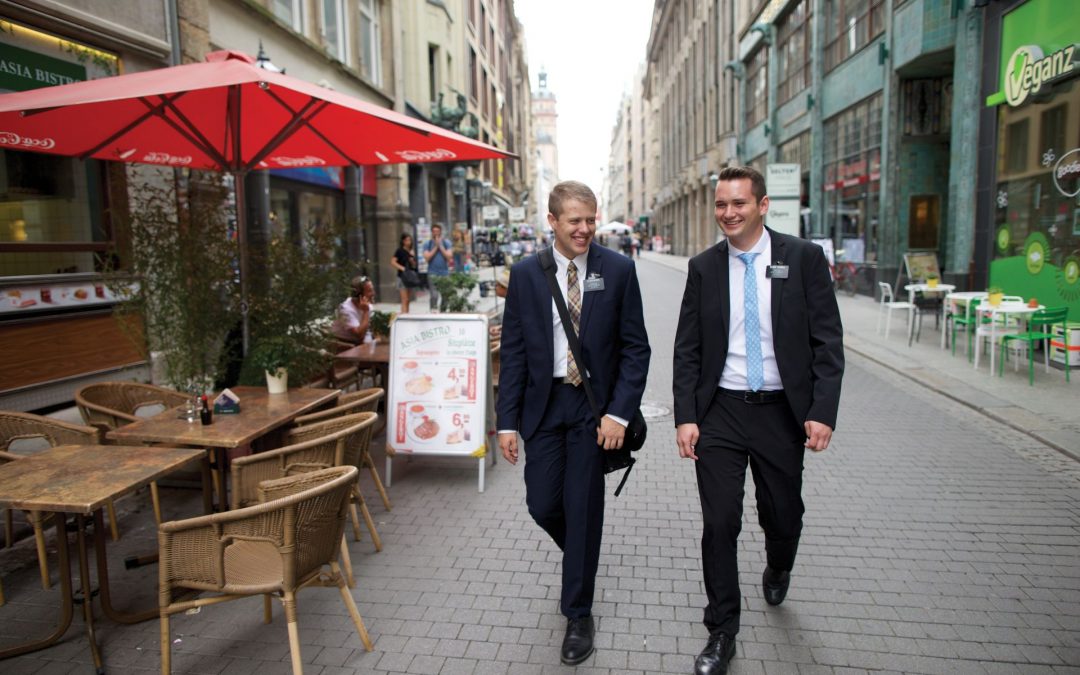
You’re probably already familiar with the main body of missionaries — the 19-21 year-old men devoting two years of their lives, and also a few 20-22 year-old women serving for eighteen months.
We were all lead by the mission president — an older, experienced leader. You might remember President Anderson from our first episode. They serve about three years, and their job is to make sure we younger ones stay in line and focused on the work.
Our mission covered the southeastern corner of South Korea. There was another mission to the west of us, complete with its own mission president and hundreds of young missionaries. And two more missions to the north covering Seoul and surrounding areas.
Each mission president gets two APs — Assistants to the President. Yeah — that title really exists. And they’re designated from among the younger missionaries. Then, each mission is broken into zones — in each of which, two young missionaries are designated as zone leaders, reporting to the President.
Each zone is further broken into districts, each with its own district leader. We comprised the Chungri (중리) District in Taegu. Elder Shumway was our District Leader, and we had four male missionaries, all living in the one apartment. And we also had two sister missionaries in our district slightly older than us, who lived in their own apartment — a place we could never go.
All of the missionaries mentioned above are volunteer positions, and none of us got paid — not even the mission president, (though they usually have housing provided and possibly some other expenses covered).
We missionaries tended to be foreign — mostly coming from the United States, but a large chunk of us were native Koreans who stayed in their own country to serve, though in a mission separate from where they lived.
Local church members also helped us with the missionary work. Pak Kyung-jae, as our ward’s mission leader, didn’t direct our efforts, but rather helped and assisted us. He helped to organize things, though we always had final say. He also led other ward missionaries — about six other ward members — a whole local team supporting us missionaries.
In other words, we officially reported up our chain — each missionary to their district leader, then to the zone leader, sometimes to the APs, and finally the President himself. The ward mission leader and his team were just there to help us out. And boy, did he have a crazy good idea for the coming week!
We met in one of the classrooms: all six of us Chungri District missionaries, including Sisters King and Anderson, the latter of which was not related to our own President Anderson. And also in attendance were Brother Pak and his team of six ward missionaries.
We all sat around a portable folding white table. After an opening prayer and a hymn, Brother Pak said in Korean, “Thank you for coming. We’ve been discussing, and this week we’d like to do a chon-shi-hwei (전시회 / Open House).“
“A chon-shi-hwei?” asked Sister Anderson. “What is that?”
Brother Pak said, “We’re going to open up the church this Friday and Saturday from 1PM to 8PM. We’ll set up exhibits, and we’ll have people in charge of explanations and answers. Anyone can visit, see our church, see our exhibits. And we can give out Mormon Kyeongs, and collect referrals for you.”
“Oooh,” said Sis. King. “That sounds exciting. A wonderful idea! What do you need us to do?”
Yes — Sisters Anderson and King, and Elder Benjamin were all excited, all bright-eyed and bushy-tailed, but it looked as if the other two elders were thinking the same as me: “Ugh.” We were terrible at putting together exhibits, and this was going to take up all our time this week. We were going to be happy when it was over.
“Well, we could use help with the exhibits, though we ward missionaries can take care of most of that,” said Bro. Pak. “We will need to get the word out, and that’s where you can help. Go out and tell people about the chon-shi-hwei — get them to come, and in return, you’re going to get a lot of referrals.”
Sis. King said, “Sounds good. Sis. Anderson and I could help with the exhibits. We’re good at that.”
Elder Shumway said, “I suppose we could design a business card to hand out — get it printed tomorrow during our P-Day.”
Elder Benjamin said, “Elder Elder and I could also help out with the exhibits.”
“Hmmm,” I said. “They might already have enough people helping out with that.”
“I’ll tell you what,” said Bro. Pak. “You missionaries can come over on Thursday for final preparations. You can help us set up the exhibits, and get the church ready. That should give you three good days of finding people.”
The meeting continued on for at least another hour, which at first I thought was pure torture, but toward the end, it didn’t all sound quite so bad.
January 29, 1990 (Monday)
During P-Day activities, all four of us elders visited a shop and had business cards printed for us to hand out.
After P-Day (which ended about 5PM) and dinner, we decided to hit the bus terminal in hopes of catching people traveling home from New Years Day celebrations, and hand out Mormon Gyeong's with the Open House cards as bookmarks.
For this activity, we brought a street board. This is similar to the exhibits being put together by the ward missionaries, but small enough to carry on buses. And yes — the sister missionaries put it together a while back and we had been borrowing it.
This board sported a large Christ in the middle with arms stretched out, and nail prints in his hands. Several other different pictures surrounded this image of Christ, each with concise talking points written next to them. There was a picture of Joseph Smith talking to Heavenly Father and Jesus. Another depicted eternal families. One picture showed someone getting baptized. Another showed the laying on of hands, and another featured bread and water for the Sacrament (Eucharist).
Now think back to your favorite movies depicting civilizations from centuries ago, and the people prophesying, trying to get people to repent. Well, that was pretty much what we were doing, and did I already mention that it wasn’t my favorite activity?
So, we arrived at the bus terminal, and as expected, it was busier than usual. It was also quite cold, with snow on all the grassy areas. We found a spot near the crowd, but also mostly out of the way. And then we opened up our street board and propped it up. It immediately drew attention, but within a minute, people started moving around and away from us. And we often heard Mormon Kyo (the Mormons), and Mal-Il-Song-Do (Latter-day Saints) as people got near.
With everyone trying to avoid us, we had to go after them with our elevator pitches, trying to get them to stop at the street board, and exchange contact information. Often this was met with, “Me no speaky English,” even though we were speaking Korean. Or “No … Bul-kyo,” telling us that they were Buddhist. It was kind of funny how that religion was a minority until we did street boarding.
But always, we would usually succeed in stopping someone. And we did get a few. Some wanted to practice English. Some wanted to tell us we were idan (heretic), and how we should convert to the predominant sect of Presbyterianism. Also, some were genuinely interested, as the ideas on the street board were indeed new concepts for most Koreans.
However, this day. most seemed more interested about going home, having spent all Saturday partying, and Sunday sobering up, most of them were tuckered out. And so, we didn’t give out very many Mormon Gyeong’s.
But as you may have guessed, Elder Benjamin did get one guy to commit to coming to our Open House on Friday. Good for him.
January 30, 1990 (Tuesday)
We decided to spend Tuesday trying to get our existing contacts to come see the Open House.
I called our student friend, Kim Bo-yeon. Surely he would come.
“Hello, Bo-yeon? Hey, it’s Elder Elder.”
“Hey, Elder Elder Elder Elder,” he said.
After a quick laugh, I said, “Hey, I’ve got some great news. Our church is having an Open House this Friday night. We’re going to have exhibits and food. Also some games. People can look at our church.”
“Sounds like fun, but what about our weekly 7PM meeting?”
“Well, maybe you could come to the church instead of us going over there.”
After an slight pause, he said, “Um. I’m not sure that’s going to work. The good thing about our meetings is that when we’re done and after you leave here, I can immediate go back to my studies. Going to this Open House would be much more of a commitment. I’d have to ride the bus over there, and then I’d probably get stuck playing ping pong and basketball. And I have a big test on Monday. Plus, I already know your church, so what else could I learn? I could certainly use that 7PM hour to get more studying done.”
“You sure?” I asked. “We could make sure you don’t stay too long.”
“It’s okay. I’ll just see you next week.”
Such a shame. I was hoping he’d be inspired to get baptized after the excitement of the Open House, and at this rate, it just wasn’t going to happen before he left to the Americas. Why was he dragging his feet?
Elder Benjamin caught Baek Ho-sung, the rich guy, and that didn’t go so well. He was short on the phone and said basically: I’m too busy. I’ll let you know when I have time again. Seriously, what was he doing that was taking up all his time?
We did get a couple of our more random contacts to commit to coming. I suppose that was good. Elders Shumway and Riley reported similar success, or lack thereof. Very few of their regulars committed, but some of the more random ones did.
January 31, 1990 (Wednesday)
We continued more of the same activities: door knocking, calling contacts, and even another street boarding session near downtown. But most of the people just weren’t interested. It was turning out to be a big waste of time, since we had cancelled most of our prior appointments, and we were way behind on our monthly Mormon Gyeong goals. Throughout our whole mission, we were all challenged to hand out one Mormon Gyeong each day for each companionship, and we had to report results each transfer day. As a household, that meant 60 books for each transfer period, and we were still at only 18 total, with just one week left to transfers.
So not only did I not enjoy these new activities, which appeared to be unfruitful, but it was also slowing down our progress in our regular activities. I tried not to complain, especially when Elder Benjamin appeared to be enjoying himself. Nevertheless, I was getting worried; what were the zone leaders going to say when we reported low stats and hardly anybody came to the Open House?
February 1, 1990 (Thursday)
We spent the whole next day at the church. Bro. Park, who took a whole day off of work, was in charge of the activities. The gym was our work area. We had posters, magazines, scissors, tape, markers, and glue everywhere.
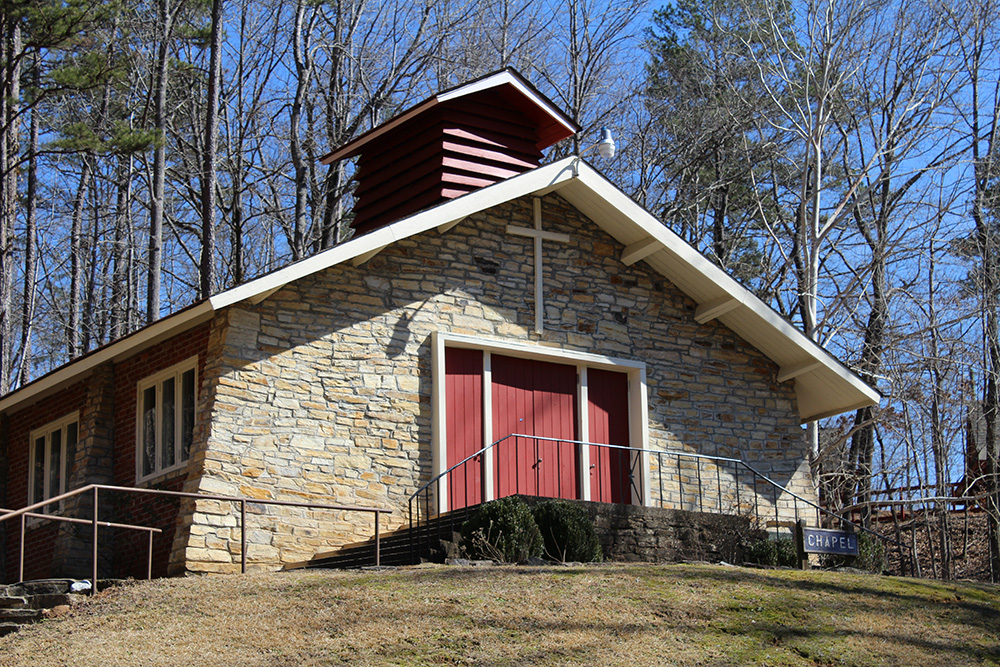
When we finished an exhibit, we found a place to put it somewhere in the church. Many would be set up in the gym. Several went out into the hall. Nothing went into the chapel, because it was too sacred. The chapel would be part of the tour, but without exhibits. We even put a couple of exhibits in the basement with the ping pong table.
The sisters were there, front and center. I did mention how good they were at this stuff. Elder Benjamin, too. Not me, so much — I wasn’t big with all this art. How do you make things look good on a poster board? I didn’t know.
There were many times I struggled to know what to do. If someone told me, “put that there,” then sure — I could do that. Sometimes it felt like I was just getting in the way. I’d much rather be having discussions with our contacts and helping them progress. At one point, I just played piano to help provide a reverent environment while they worked. I don’t think they minded me doing that.
Throughout out the day, the other six ward missionaries came and went as their schedules allowed. And that’s when it hit me. There was so much excitement in the gym as we worked, and I had closed myself to it all. They were all having fun, but not me. What was it they enjoyed so much? Didn’t they know no one was coming, and this was one big waste of time?
Could it be that I was just wrong?
When we got home, we got a call from the Zone Leaders. Elder Shumway spoke on the phone to Elder Thomas, who was my companion a few months ago. We were roughly the same mission age, but now he was Zone Leader, with the likelihood of soon becoming AP. And I was still co-senior, and had yet to have a junior companion.
Elder Shumway hung up the phone and said, “Guess what everyone!”
“They’re cancelling the Open House?” said Elder Riley.
“No, in fact, they’re excited. And they want to help us out tomorrow. That’s right! We’re doing splits tomorrow before the Open House starts. We’re going to divide and conquer. They know we’ve been struggling to get people to commit to coming, and they think they can help.”
“Awesome!” said Elder Benjamin.
“Elder Thomas wants to split with you, Elder Elder,” said Elder Shumway.
“Hey — that’s great,” I said — and just when I thought the week couldn’t possibly get any worse.
February 2, 1990 (Friday)
The splits happened right after lunch, as the Open House officially began. Brother Pak and his team of 6 manned the church while we missionaries went out to attract traffic. This would be like we had done earlier in the week, except this time we’d be able to say, “You can head on over right now. We’re open till 8PM.”
We met with Elders Thomas and Sargent on the street. Elder Thomas shook my hand first and said, “It’s been a long time. You’re looking good.”
“Yeah,” I said. “No more Masan Zone for us.” I ‘m certain he knew that Masan was my least favorite experience in regard to how the other missionaries treated me, and I’d most likely continue to take every opportunity to remind him. After Masan, I had been transferred into the deaf program in Pusan, and then in Taegu (which failed), and Elder Thomas went into leadership. Good for him.
“I’ve got a fun plan for us, today … something I bet you haven’t tried yet. We can try out the middle school near us.”
“A middle school?” I asked. “You’re right. We haven’t tried that yet.”
“Kids that age are perfect. Inquisitive, open-minded, and think about it. Right after school ends, it’ll be some time before their parents get home, so they have an hour or two to kill. So, why not come to the Open House? Check out the Mormons! We can approach them during recess while they’re outside and get them to commit.”
“Get in the van?” I said with a laugh.
“Oh, Elder Elder. You’re still so silly. There’s no van. Everything’s out in the open. Check out the church, take a Mormon Gyeong, and they’ll be home for dinner.” And so we headed over to the middle school. I was a little sad, since it was still cold outside, and I would have preferred an inside proselyting event.
As we walked, Elder Thomas said, “How’s it going with Elder Benjamin? I know he’s a little different.”
“Yeah. He’s certainly different. We’re doing pretty well. We’re like best friends. He’s a funny guy.”
“As you know, transfers are coming up next week, and we’re making plans.”
“I know,” I said. “I’m not sure I’m ready to move just yet.”
Elder Thomas laughed softly. “You’re not going anywhere. We know that you’ve moved enough in the last few months. Believe me, everyone wants to keep you where you are now.”
“That’s good to hear,” I said truthfully.
“We’re a little worried, though,” said Elder Thomas. “No baptisms in seven weeks? Your Mormon Gyeong counts are low for this month, I hear.”
“We’re working on it. You’ve seen the reports on Kim Bo-yeon. He’s going to get baptized.”
“Oh yeah, the college student. But when is he getting baptized? You still have no commitment, and it’s been six weeks now.”
“He’s not ready. He’s about to go to America, and doesn’t want to make a commitment yet.”
Elder Thomas said, “You’ve got to change that. Get him ready — before he goes, because you know what’s going to happen when he gets over there? He’s going to get caught up with his studies, and forget all about the Church. Then when, and if, he comes back here, you’ll be gone, and he’ll have no incentive to join. You remember the techniques I taught you how to get a commitment?”
I tried not to chuckle, because I was his companion for two months, and I rarely saw those techniques work when he used them. Instead I said, “I know he’s going to get baptized. I’m not going to push him before he’s ready.”
“Well, we were hoping the two of you would show a lot more results with your individual styles. Do you have anything else in the works?”
It was funny how zone leader splits always turned into zone interviews. They just couldn’t help themselves. “Let’s see,” I said. “We’re trying to reactivate Baek Ho-sung. We’ve met with him a few times.”
“I see — the rich guy. It’s an interesting report, but he’s already baptized, and you’re not getting anywhere with him. You’ve got to know when to let them go and focus your energy on someone else who’s ready. How about this? Tonight at the Open House, I want you to pick one prospective investigator, and I want to focus on him all next week. If you do this, you will be blessed, and he will get baptized. Oh, and get that commitment from Bo-yeon. You could have two baptisms next month, making up for lost time.”
“Sure,” I said. “I’ll consider it.”
“I’ll be honest with you,” Elder Thomas said. He had the annoying habit of speaking into the air instead of directly at me. “We don’t know what to do with Elder Benjamin. All of his companions have trouble with him. I get it — he can be very distracting. Where to put him, we just don’t know.”
“You could keep him here with me,” I said.
“We have to do what’s good for the mission, and I know you and your potential. You can do much better than this. It wasn’t my idea to put the two of you together, but the AP’s and President Anderson made the final decisions. It was a good experiment, but perhaps it’s time to try something else.”
I said it before I could stop it. “I miss the days when I was the problem missionary.” That got him to look directly at me, and it wasn’t exactly a happy, loving face. We stared at each other for a few seconds, and then we heard the sound of young students playing outside: sports, laughing, and so on. We had arrived at the school.
“Okay, Elder Elder, let’s find us some Open House attendees.”
Unlike schools today in America, this school was wide open. It was easy to get into the field, and even into the building if we so desired — as long as we didn’t disrupt classes. There seemed to be a fine line where if we crossed, we were noticed. So, naturally we stayed on the safe side of that line. We didn’t want to interrupt any of the organized games, so we approached a group of kids playing chegichagi (제기차기), what we call hacky sack.
“Hello, children,” said Elder Thomas. “How’s it going?”
The middle-school students continued their game as they talked. One said, “Busy. Playing chegichagi. Who are you?”
“We’re foreign missionaries from America. Church of Jesus Christ of Latter-day Saints,” said Elder Thomas.
Another kid said, “Latter-day Saint? Isn’t that heretic?”
“We believe in Jesus Christ.”
Another kid said, “I’m bulkyo.” Yeah — they were taught that trick young.
I could relate more of this encounter, but I think you get the gist. They weren’t interested, despite Elder Thomas’ many attempts. We approached another group of kids playing some kind of four-square-looking game with markings on the concrete. They weren’t interested to talk to us, either.
This time, Elder Thomas turned to me. “Let’s see what you can do.”
“Um,” I said to the kids. “Do you know any English?” Elder Thomas raised an eyebrow at that. Well, what did he expect? I had my own style.
The kids stopped what they were doing and one of them said in English, “Hello. I am speaky English,” and the other kids laughed. “How you?” one said. Another said, “I like dogs.” So much laughter!
Elder Thomas said to me, “That didn’t seem to work. What comes next?”
“At least I got them to stop their game.” I then turned to the kids and said in English slowly, “If you come to the church with us, we will teach you more English.”
They stopped laughing, and all looked at me. Was it working? No — they doubled over and went back to laughing and speaking more broken English phrases. “Look at me. I’m mi-guk. America. I no speaky Korea.”
At that moment, a snowball hit my back. I turned quickly and said in Korean, “Who threw that?” I didn’t see anyone, but I heard giggling behind a big bush.
I turned back to the four-square kids and said in English, “Okay, who wants to come with us? We got ping pong!”
This triggered another round of laughter and bad English, and another snowball from behind. I turned around and caught a small kid ducking behind the bush.
One of the four-square kids said in Korean, “Don’t mind those kids. They’re from the elementary school.”
“Really?” I said. “Well, they’re going down!”
I grabbed some snow from a patch of grass and while I balled it up, Elder Thomas said, “Don’t lose focus, here.”
“They’re asking for it,” I said. I ran past the bush and pelted a kid in the face. And suddenly I was surrounded by five elementary boys. And I realized my mistake. All five of them unleashed their weapons, plastering me.
I ran. “Elder Thomas! Help!”
“Oh, Elder Elder. Really?” He paused at first, and then he bent down to make snowballs, and commenced pelting the kids. It was two against five, and we were bigger. The snowball fight ensued for a few minutes.
I said to Elder Thomas, “Are you thinking what I’m thinking?”
“What?”
“Remember when Alma tried to preach to the rich, and they wouldn’t listen, but the poor were listening from the sidelines? Remember what Alma did next?”
Elder Thomas laughed. “He turned to the poor and started preaching to them, turning his back to the rich.”
“Exactly!”
Elder Thomas then held up his arms. After the kids plastered him, he said, “You want to come visit our church down the road? We have exhibits and refreshments … and ping pong. And you can be back here by 5PM.”
“Sure,” said one kid. “Me, too,” said another. The other three hesitated. And then, Elder Thomas and I commenced walking back to the church with two elementary school kids in tow. The other three stayed behind. Though, as we walked, I noticed they were still following us from a distance.
Outside the church, we ran into Elder Benjamin. He asked us, “Hey! Who are your friends?”
Elder Thomas pointed to the two kids and said, “This is Ki-su and Do-hang. They’re going to check out our church.”
I added, “and I think we got three more following behind us? How did you two do?”
“We had a blast. We brought twenty people with us.”
“Twenty?!” said Elder Thomas. “How in the world did you do that?”
February 2, 1990 (Friday): Elder Benjamin’s Story
Isn’t this such an exciting opportunity? It reminds me of the mission of Ammon and his brethren. They had to teach the Lamanites, but first they had to prepare. And they had to find the people. But since they were prepared, they could teach the people. They taught them in their houses, and in the streets, and in their hills, their temples, and their synagogues. And many were converted.
And that’s what this Open House is about, today and tomorrow. We will bring people into the church, and then they will see what the ward missionaries have prepared, and then they will want to know more. We’re going to have so many discussions lined up that we’re going to be exhausted when we lay our heads upon our pillows each night.
And today, we had splits with the zone leaders. That means twice the number of people we can attract to the Open House. Elder Elder went with an earlier tongbanja, Elder Thomas, and I went with Elder Sargent.
While Elder Elder and Elder Thomas decided to visit schools, we decided to go to the bus depot again. We grabbed the sisters’ street-board, and got on the bus. The back seat was open, so we took it. I don’t know why, but that’s my favorite spot. Everyone who comes on the bus can see us sitting there. And sometimes they’ll sit next to us there just for the fun of it. People tend to talk more in the back seat. I think they just like to hear themselves talk, because they know everyone on the bus can hear them. Plus — this time we had the street board, so we also needed a place to lay it down.
I was ready to talk with the others on the bus, but Elder Sargent wanted to talk with me. He said, “Are you enjoying this area?” I told him that it was my most favorite area ever. And then he asked, “What would you think about moving on to another area?”
“Oh, I don’t know,” I said. “I don’t want to leave Elder Elder. He’s just the best.”
“Oh, we’re just thinking of some other opportunities for Elder Elder. He’s getting toward the end of his mission, and he could train a greenie, or become district leader. And you could also have new opportunities.”
“Interesting,” I said. New opportunities can be exciting, but I thought about Ho-sung and Bo-yeon. “I don’t think we’re done yet. We still have work to do.”
“You’re talking about the college student? Isn’t he leaving for America soon? We’re just a little concerned, because he should have been baptized already. You’ve been together for almost two months and not a single baptism. We were expecting more results.”
Talk about your buzzkill. I knew we were on thin ice this whole time, and now I had proof. Whoever didn’t want Elder Elder and me to get together had been trying to split us apart this whole time. What could I say to convince them otherwise? I said, “We’re still working on it. We’ve planted hundreds of seeds.”
“Your district leader says your behind on your Mormon Gyeongs, too.”
“We’re prioritizing our discussions,” I said.
“And yet, no baptisms?”
I wasn’t sure how to respond. It’s like they’re always focusing on the wrong stats instead of just following the Spirit. For example, while we were sitting on the bus talking about this, the Koreans were avoiding us. We were missing out on a golden opportunity to talk with them — show them our street board — direct them to go see the Open House. But instead, there we were, talking about … well … politics. What could I do to help him see what we were doing? How could I convince these guys that the Spirit works on its own schedule. He knows what others need, and how fast they’re willing to go. Elder Elder and I were working hard — miracles surrounding us. Why would God want to split up this dynamic duo companionship? I knew that our best days were still ahead of us. If anything, it was the Adversary working hard to split us up, because he knew what we were capable of.
So we ended up in silence for the rest of the trip. When Jesus had nothing to say, he kept his mouth shut. He didn’t speak even a word to Herod, because there was no purpose in it.
Well — except — wait! We were a couple of stops away from the bus depot, and the Spirit said to me, “Get off now.” So, I said, “We need to get off, here.” I pulled the cord, grabbed the street board, and got ready to exit.
“Wait,” said Elder Sargent. “We’re not there yet. Where are you going?”
“Aren’t you coming?” I said as the doors opened.
“Elder Benjamin! Wait!”
I jumped off the bus, and I heard behind me, “Naelimida!” Elder Sargent alerting the bus driver that he was getting off. As he jumped off the bus, the doors shut, and the bus drove off.
“What are you doing, Elder Benjamin? Didn’t you hear what I said?”
“Yes, I heard you,” I said. And then the Spirit told me to go right. “We need to go this way,” I said as I walk ahead.
“Elder Benjamin! This isn’t the way to the bus station. Where are you going?”
“I really have no idea. We’re going to find people to teach. This way.”
“We had a plan,” said Elder Sargent. “You need to tell me where we’re going.”
“We’re turning left here — that’s what the Spirit is telling me.” We were heading away from the busy parts of the city and more toward a suburb area. At this point, Elder Sargent stopped complaining and followed. And finally, I saw it: the intersection where we were supposed to go. A really quiet one. “Here we are,” I said.
“Are you serious?” said Elder Sargent. “Where are all the people?” He did have a point. There was no one there.
“This is where the Spirit says we should set up.” I pulled open the street board and propped it up.
Elder Sargent couldn’t seem to wipe that surprised look on his face. “Okay. I don’t get it. At the bus station, hundreds could walk past us every few minutes. And here, there’s nobody. Is this all because of what we were talking about on the bus?”
“No … just wait.”
It took a couple of minutes, as yes — this took us away from the main flow of people, but then it happened. Well, something happened. A man and his daughter walked along the street, and when the guy saw us, he came straight toward us, across the intersection in the middle of the roads as they crossed.
“Look,” I said to Elder Sargent. “Here comes someone now.”
“I can see that.”
“Hello,” said the man in English as he approached. “You are American? Yankee?” His daughter followed him slowly, almost as if reluctantly. She looked to be an older teenager.
“Yes,” said Elder Sargent in Korean, ”We are American missionaries. Would you like to hear a message about Jesus Christ?”
The man turned to me and said in English, “My name Yeoung Su-ho. And this my daughter, Su-ah.” The daughter caught up and smiled shyly.
“Hello,” I said in Korean. “I’m Elder Benjamin, and this is Elder Sargent.”
“Hello,” said the old man, now speaking Korean. “I am a very poor man. My father was poor, and his father was poor. Many generations back, we’re poor, and we want to break free. You Americans are rich, are you not?”
“I wouldn’t say we’re that rich,” I said.
“Everybody’s rich in America. Here, if you take my daughter back with you, she will be rich and break the cycle. She’d make a very good wife.”
“Um …”
In English, Elder Sargent said to me, “You need to nip this in the bud, now.”
I said to the man, “We’re not looking to get married. We’re missionaries, and we’re only here to teach the Gospel.”
Elder Sargent said to him in Korean, “And we both have girlfriends waiting for us to come back.”
“Wait,” I said to Elder Sargent in English. “I don’t have a girlfriend.”
“You do, now. This is highly inappropriate. You want to get sent back home? This was a big mistake coming here — he only approached us because we’re all alone. I don’t get it. This is what happens when you don’t stick to the plan. This already does not look good for you, and I can see now that it’s time for you to move on. But it’s not too late. I’ll give you one last chance to end this. We still have time to hit the bus station and direct people to the Open House.”
The Korean guy, Su-ho, stared at me intently, his eyes full of both despair and hope. I couldn’t leave him empty-handed, but was Elder Sargent correct? I didn’t want to get sent home. But the Spirit said, “It’s going to be okay. You’ll know what to do.” I heard it as clearly as you hear my voice now telling you this story.
I said to Su-ho, “You can break the cycle now. Jesus can show you the way. His Gospel is transformative. With a clear perspective, you’ll see what you need to do to break free. You can give your daughter a good life, and you can be rich with the blessing of heaven.”
Elder Sargent said, “Elder Benjamin. What did I say?”
“The Spirit constrains me,” I said. “This is the man we were supposed to meet.” I turned to Su-ho, and said in Korean, “What do you think? Would you like to learn more?”
He looked at our street board and said, “Jesus Christ? He can really save me?”
“We’re holding an Open House today at our church. Here. There are directions in this Mormon Gyeong.”
“Mormon kyo? You are Mormon?”
“I promise,” I said as the Spirit directed, “that you will see prosperity in your lifetime. Why not give it a try?”
Sun-ho turned to his daughter. “What do you think, Su-ah? Should we go?”
She nodded her head and seemed to look somewhat relieved about this not being an arranged marriage. Sure, she was cute with her brown hair and brown eyes, but like Elder Sargent said, marriage was not an option.
Sun-ho said, “Okay. I’ll come. But I don’t have enough money for bus fare.”
Elder Sargent said, “I’ll pay for the both of you — both ways.” I was happy to see that he was finally listening to the Spirit.
“What about my friend?” asked Sun-ho.
“You have a friend?” said Elder Sargent. “Sure — is he close to here? The more the merrier.”
“Seriously? Walk with me … let’s go find him. We’re all poor in my neighborhood — it’s just a couple of blocks from here. I know he’d like to hear about this, too..”
And so, we walked with him. As he promised, he led us to a poor part of town — a nook of poor houses near the middle of the city. We went to a particular house, and Sun-ho knocked. His friend Mal-chin answered, and in a couple of minutes, he came to join our party. And then that guy had a friend, and well — in thirty minutes we had twenty people following us, and Elder Sargent promised to pay all of their bus fares.
“I think this is enough,” Elder Sargent said to me. “Let’s head back. Oh, and one small issue. You do realize that they just barely live in the next district over. You’re going to have to refer all of them over there.”
“Oh well,” I said. “I’m used to this. Happens to me all the time.”
February 2, 1990 (Friday): Back to Elder Elder at the Open House
Nothing had prepared me for what I’d see once I entered the church. It was packed. Well — not like New York Times Square packed on New Year’s Eve, but I saw more people than what I usually saw at our church during services. People of all ages, though mostly in their twenties. People walking in and out of the different rooms.
The gym, our flagship room, was bustling with excitement, people studying our exhibits. I could almost tell which ones looked genuinely interested, which ones were skeptical, and which ones were only there for the novelty.
The two grade-school children who came with us ran around pointing at the exhibits, having fun. The other three who lagged behind were also looking around, but did their best to hide their interest whenever anyone saw them. Which was it? Watching their friends? Or were they secretly interested. No matter the case, these children were too young to make these decisions for themselves. Their parents would have to approve of baptism, or even just for us to teach them regularly. From my experience, this rarely happened, but what they learned now could stick with them for a lifetime, and perhaps when they got older, they would join up. After this night, I never saw any of them again.
All of our ward missionaries were talking with people, answering questions, obtaining contact information — having a blast. Sisters Anderson and King manned one of their own exhibits, and they looked happier than I had ever seen them.
And the refreshment spread was impressive. Nothing compared to New Year’s dinners, but still, there were two tables full of food, snacks, and drinks donated by many of the church members.
Oh, and yes — we had several other church members there, including the bishop shaking hands with many of the visitors, being friendly.
I was pleasantly surprised. They had actually pulled it all off.
February 3, 1990 (Saturday):
The second day of our Open House was also a success, except maybe not quite so busy. Still, when it was all over, we all helped to clean up the church. With about forty of us chipping in, it didn’t take long.
And then Brother Pak called us together to have a final meeting. So, we elders, the sister missionaries, the ward missionaries, and even the bishop went into a room, and Brother Pak presented the final results.
While reading from a piece of paper, he told us that we had collected over 200 names with contact information. He said some would have to be referred to other wards — they would have to go through the list and parse everything out for us. It was sure to keep us busy for months.
We also handed out 56 copies of the Mormon Gyeong. With that, we were all officially caught up on our totals, just in time for transfers.
The bishop congratulated us and indicated that this ward would continue holding this event every year. Good for them — I would already be home in the states by then.
As we walked home, a 10-minute walk, Elder Benjamin remarked about how this was the one event that had had the most success out of all the events he had seen in his mission, and I had to agree with him. Looking back, no effort during my two years had garnered the amount of contacts or general attention than this one Open House had in one week. I was happy to have given up one week of my mission to do all the preparation work and the proselyting, and reaping the benefits. Well — my efforts weren’t exactly the most fruitful, but I ultimately did my part. The collective efforts of many people had on the whole contributed to a major success.
And we were tired. The next couple of days would be full of resting and recuperation opportunities, and then we would have to start working through the list.
As the four of us elders entered the apartment, the phone rang. Elder Shumway ran over to catch it. “Hello?” The rest of us took off our shoes at the door and proceeded to go to our rooms to change our clothes.
“Elder Thomas! How’s life?” said Elder Shumway, and we all froze in our tracks. It was the transfer call!
“Crap,” said Elder Benjamin, and I said, “Yeah.” Our cuss words were quite limited on the mission.
“It was fun while it lasted,” said Elder Benjamin.
“Let’s just wait,” I said. “It’s not over until something something.”
Elder Shumway said, “That’s interesting. Elder Johnson? … Oh, Johnston with a ’T’?”
Elder Benjamin smiled. “I know that Elder. We were in the same group coming in. He’s kind of the quiet type.”
“Hmmm,” said Elder Shumway. “That’s a little unexpected. … Yeah, I know. He won’t be too happy about that. … They’ll be okay. … Oh, wow, that sounds like fun. Cheju Do? Seriously?”
“Whoa,” I said to Elder Benjamin. “They’re sending you to Cheju Do?” That was the Korean version of Hawaii — tropical living, awesome food, and relaxed people.
“Ugh,” said Elder Benjamin. “I don’t want to go there. Not without you. And what about Baek Ho-sung and Kim Bo-yeon? We’re not done with them yet.”
“I’ll try my best,” I said.
Elder Shumway said, “Okay, I’ll tell them. Thanks! Goodbye.” He then hung up the phone and said, “Alright guys! I got transfers! Who wants to hear?”
“Hit us,” said Elder Riley — like he had anything to worry about.
Elder Benjamin said, “Okay, where am I going?”
Elder Shumway laughed. “You’re not going anywhere. You’ll be here for at least another four weeks.”
“Oh?” I said.
“And you’re not going anywhere, either.”
Elder Benjamin and I stared at each other with excitement. Yes — we weren’t done yet.
“So,” said Elder Riley. “Does this mean that …?”
Elder Shumway interrupted him. “Yes! I’m going to Cheju do!”
“WHAT?” all three of us said. “No way!”
“Yes way!”
“So what about district leader?” I asked.
“Oh yeah,” he said with a grimace. “That’s going to be the new guy, Elder Johnston. Your new companion, Elder Riley.”
My excitement was quickly stabbed like a knife through whatever I suddenly felt like. This new guy two months younger than me was going to be district leader? For the past two months, our district had a good thing going — even a good rapport with the two sister missionaries. I had the knowledge to carry on that same energy. Why would they give it to someone else?
Elder Benjamin heartily slapped me on the back. “I know what you’re thinking. But you know what? Things are going to be okay. Great things are going to happen this next transfer. Just you wait and see. Don’t worry about district leader — we have work to do, and it’s going to be exciting.”