Sunday, July 18, 2021

Looking Back on Spiritual Thoughts


It's been almost a full year that I've been doing weekly spiritual thoughts ... and then a vacation happens, I miss a couple of weeks, and now I'm rethinking.

Overall, it's been a fun campaign. Some of my posts were pretty decent and thought-provoking. Others were kind of meh. Sometimes I felt that I was just checking off a box -- picking some random topic and blah-blah-blah-ing for 30 minutes. And sometimes I felt that I had more to say.

It's also gotten my post count up -- 2021 is already my biggest year -- more posts in this blog than in any other year. But now, looking back, I see absolutely zero progress in my other projects planned for this blog -- such as my upcoming "The Adventures of Elder Elder and Elder Benjamin" series, and my unnamed "Why I'm a Mormon" book. Also, I want to make sure that everything I produce is quality instead of quantity, so you'll feel like you're actually getting something when you read my blog.

So, instituting changes -- I'll continue having 30-minute sessions (or up to 60-minutes) each Sunday in which I'm working on something, and then when I finish something, I'll post. And I'll also make sure to include monthly spiritual thoughts (instead of weekly) to make sure you get at least one post a month. It'll be fewer posts, but overall, I hope it increases the quality -- and we can have more fun.

Sunday, June 20, 2021

Forgiveness Is Required


This week's reading is another reminder that no one is perfect. Think of any of your friends -- and chances are very high that they have sinned against you, and you have sinned against them. And then think about how the two of you react. Do you get over the sins and get on with your friendship, or do one of you (or both) let it fester and allow it to tear apart your friendship?

From this week's reading:
I, the Lord, will forgive whom I will forgive, but of you it is required to forgive all men. (D&C 64:10)
The message is clear: we should be forgiving -- no matter what. I try my best to forgive, but I'm not always successful.

I find it hardest to forgive someone who just won't repent. You may know the type. They're always right. They refuse to apologize, but it's really "you" who sinned. They're angry at you no matter what you say. And when you do apologize, they rub it in your face and sometimes capitalize on your "weaknesses." I've even had people say to me that my sincere apology is fake -- full of flowery words. And then I realize that they just generally hate me and they somehow need that hate. How do you forgive these types of people? I usually end up letting them drift away and eventually forget about them. 

Also, we humans are built with this thing called "memory." It's a very useful tool in our day-to-day survival. If we can remember what hurts us, we can learn to avoid those situations and avoid further hurt. This seems counter to forgiveness. Because if someone stabs us in the back, it becomes very hard to trust that person anymore. It would seem wisdom not to associate with that person anymore.

But here's the rub -- in Jeremiah 31:34, the Lord says: "for I will forgive their iniquity, and I will remember their sin no more." So, sometimes -- yes, if we truly forgive someone, it would include forgetting as well -- sometimes realizing that we could be opening ourselves to more hurt later on.

In watching the Lord of the Rings trilogy this past week, I'm reminded by all the Christian overtones (and surprisingly, a lot of "Mormonism" as well). Gandalf tells Frodo to have mercy on Gollum, as the monster halfling (Gollum) still had a part to play. And throughout the story, Frodo forgives Gollum several times, while Sam is slow to do so. At one point (as Jackson presents it), Sam's lack of trust helps to push Gollum back over to the evil side. Frodo's forgiveness allows for a favorable ending.

Also, I noted how someone of Rohan says "Why should we help Gondor when they didn't come to our aid?" But they ride nonetheless. Again -- forgiveness saves the day.

People often equate forgiving someone as being freed of chains. That is -- we bind ourselves when we choose not to forgive. And I can testify -- that hundreds, if not thousands of times, I have forgiven many -- sometimes the same person several times, and the vast majority of the time, it works out much better for the two of us.

Because ... when it comes down to it ... nothing's more important that our interactions with other people as we help each other throughout life.

So -- think about it -- is there someone you know who needs your forgiveness? Can you find a way to forgive them, and free yourself? 

What are your thoughts?

Sunday, June 13, 2021

The 50%?


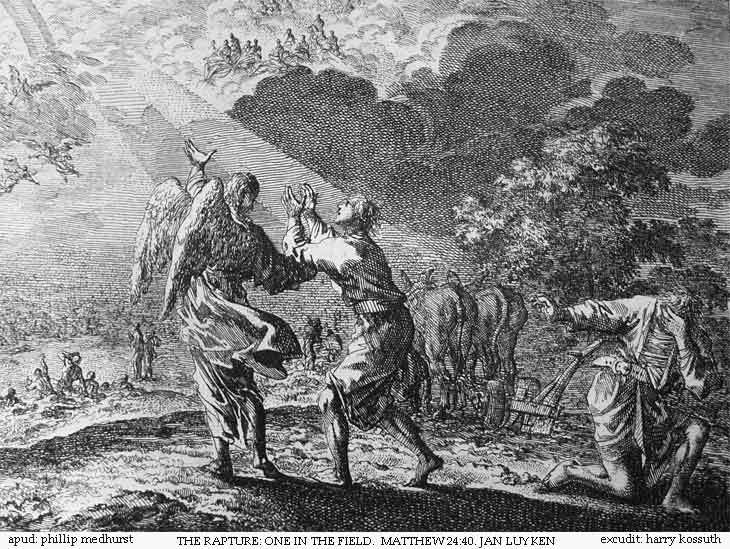
Matthew 24:36-42 says:
But of that day and hour [of the coming of the Lord] knoweth no man, no, not the angels of heaven, but my Father only. But as the days of Noe were, so shall also the coming of the Son of man be. For as in the days that were before the flood they were eating and drinking, marrying and giving in marriage, until the day that Noe entered into the ark, and knew not until the flood came, and took them all away; so shall also the coming of the Son of man be. Then shall two be in the field; the one shall be taken, and the other left. Two women shall be grinding at the mill; the one shall be taken, and the other left.

Watch therefore: for ye know not what hour your Lord doth come.
Some people refer to this passage and somehow get the idea that exactly 50% of everyone will make it into the Kingdom of Heaven. Half go up, and half go down. Some others see this as a kind of Rapture that is to occur in the future -- where the more righteous half will be taken up prior to a period of "tribulation" among the not-so-righteous.

I, personally, think that piece of scripture is much more about being prepared, as we know not when Christ will come. But let's explore further this idea of the 50%.

First, notice the use of the word "taken" in the full context. When talking about the flood and the ark, Jesus seems to use "took them all away" as a bad thing -- as in, the water swept them away. And then he uses the same word (though conjugated differently) saying twice: One shall be taken, and the other left. If the original word holds true, then I think I'd want to be the one left behind, as to "be taken" may mean to "be swept away."

But either way: whichever of the binary you choose to believe, the meaning is the same: one will be saved and the other one cursed. So, let's talk in terms of being saved. I'll let you decide on your own for now what "being saved" means -- maybe we'll explore that question in a later post.

So, will only 50% be saved? I don't think the scripture is meant to show an actual ratio. I think it's only to depict that you can have two people standing in a field -- very similar to each other -- working away, similar desires, possibly similar builds -- in other words, no evident way to distinguish between the two. But yet, the Lord saves one and not the other -- for it's what's inside that matters.

As for actual numbers -- it could be more than 50% saved, and it could be less. We have no way of knowing whether it the 90% range, or more in the 10% range. But I do know that it's not a 50/50 thing -- whoever does better than 50% of others will be saved -- as this doesn't make any philosophical sense. I know that we will be saved on our own merits, and not in comparison to other people's merits -- in other words, we're not going to be graded on a curve. Otherwise we could end up tempting others to do evil as a way to get ourselves into heaven.

So, now we've lost the meaning of 50%, the question now becomes: Who exactly will be saved?

Here, there is a very subtle meaning in the parable -- it doesn't matter what church one may or may not belong to. Jesus might as well have said: "There will be two sitting in a church service, and one shall be taken, and the other one left." No way to distinguish between the two churchgoers, but one is more ready to be saved than the other.

It isn't knowledge that will save us. At one time when Jesus was casting out some devils, they spoke and testified that they knew he was the Son of God -- but that knowledge alone didn't save them. And yet I see many times over in several religious debates: "We will be saved and you won't be saved because you are wrong." When in actuality, Jesus is warning: It's not a test on knowledge, but rather, it's a test on what you do with the knowledge given you, and how we treat other people. Are you willing to do the preparations and be ready to be saved when the time comes?

So in summary: we don't know how many will be saved. Belief, by itself isn't sufficient, unless we internalize it and allow it to change us. We will not be graded on the curve -- we will be saved on our own merits. And are we ready?

Sunday, June 6, 2021

Building Up Zion


Right now in our Church History reading, we're currently around August 1831. The Saints have already left New York, have been settling Kirtland, Ohio, and then Joseph Smith goes with a contingent to check out Jackson County, Missouri, which is designated as Zion -- their "promised land."

But when they arrived in "Zion," they found a small frontier establishment. The land didn't look very exciting. The people already living there were hostile and very "uncouth." So, the guys turned to Joseph Smith and asked, "Are you sure about this? It's a big hole in the ground. How can this be Zion?"

When Joseph Smith inquired of the Lord, he received confirmation that Jackson County was indeed Zion. It just needed some love and attention. The Saints were to buy land, develop it, and turn it into something.

I'm reminded of the "twelve spies" in Numbers 13 that Moses sent to scope out the promised land. When these spies returned from Canaan, 10 of them reported: "The land is great, but the people there are strong and they will destroy us. Their cities go up to heaven. Etc. etc." These reports caused the people (in Numbers 14) to again wail and ask to return back to Egypt, and this is even after all the traveling they had done so far.

But two of the spies, Caleb and Joshua (Oshea), gave good reports. They saw the potential, and knew the children of Israel could take the land. God, in his anger, proclaimed that none of the adults except for Caleb and Joshua would enter into the promised land. After all -- Canaan was the one goal -- the one reason for bring the people of Moses out of Egypt, and across the desert for so many years. How could the people lose sight? Could they not trust in the Lord? Sure enough, many died of a plague shortly afterward.

Joshua and Caleb ultimately led the remaining Israelites -- the rising generation -- into the promised land and then the Jews flourished and built up a strong nation.

Likewise, the Saints who built up Independence in Jackson County also flourished for a short time -- until fierce opposition would drive them out only two years later -- but we haven't gotten that far, yet.

Later, as you probably know, the Saints would ultimately journey to Salt Lake City, Utah, and build up a new Zion in the mountains. Though, we still consider Jackson County to be the site of the New Jerusalem that is yet to be built -- and it will yet become the promised Zion.

But I think the biggest takeaway from all of this is that Zion is what we make of it. If we see it in its undeveloped state and toss it aside, then we miss a wonderful opportunity. If we instead see the existent potential, and choose to develop it, then Zion arises.

So, we can all build our own Zions. If we see something we don't like, we can still take it and turn it into something wonderful, and grow, and learn things in the process.

So -- go out there and build your own Zions! And then you can look back to see everything you've accomplished.

Sunday, May 30, 2021

Would You Have Looked At the Brass Serpent?


Are you familiar with the Old Testament story of Moses and the brass serpent? Here is the story as told in Numbers 21:5-9...
And the people spake against God, and against Moses, Wherefore have ye brought us up out of Egypt to die in the wilderness? for there is no bread, neither is there any water; and our soul loatheth this light bread. And the Lord sent fiery serpents among the people, and they bit the people; and much people of Israel died.

Therefore the people came to Moses, and said, We have sinned, for we have spoken against the Lord, and against thee; pray unto the Lord, that he take away the serpents from us. And Moses prayed for the people. And the Lord said unto Moses, Make thee a fiery serpent, and set it upon a pole: and it shall come to pass, that every one that is bitten, when he looketh upon it, shall live. And Moses made a serpent of brass, and put it upon a pole, and it came to pass, that if a serpent had bitten any man, when he beheld the serpent of brass, he lived.
The Book of Mormon provides more information in 1 Nephi 17:41...
[The Lord] sent fiery flying serpents among them; and after they were bitten he prepared a way that they might be healed; and the labor which they had to perform was to look; and because of the simpleness of the way, or the easiness of it, there were many who perished.
And even more in Alma 33:19-21...
Behold, he was spoken of by Moses; yea, and behold a type was raised up in the wilderness, that whosoever would look upon it might live. And many did look and live. But few understood the meaning of those things, and this because of the hardness of their hearts. But there were many who were so hardened that they would not look, therefore they perished. Now the reason they would not look is because they did not believe that it would heal them.

O my brethren, if ye could be healed by merely casting about your eyes that ye might be healed, would ye not behold quickly, or would ye rather harden your hearts in unbelief, and be slothful, that ye would not cast about your eyes, that ye might perish?
To summarize: fiery snakes are biting the people of Moses. Instructed by the Lord, Moses creates a serpent of brass, and lifts it up on a pole. Anyone who looks at the snake lives. Yet, many choose not to look and they die -- whether it be because of the "simpleness of the way" or because of unbelief or a hardened heart.

If you're anything like me, when you hear this story, you may be asking yourself, "Would I have looked at the serpent of brass?" It's so easy to look back at the story in full 20/20 hindsight and answer, "Of course I would have looked up. It would have been foolish to not look." 

But then again, we weren't in the midst of the disaster. It's one thing to choose 3000 years later after it's all been said and done, but it's another to have to make this decision when there are fiery snakes biting people all around you -- in the heat of the moment. I can imagine some of the reasoning that was going on:
"How in the world can looking at a brass snake cure me? What stupid nonsense is that?"

"Moses is trying to control us. He made up the Plates and the Law. He brought us into this mess, and now he asks for our faith. Once we are all saved, he'll take all the credit and we'll all be under his control."

"I'm not looking at the serpent of brass. That's a graven image, and the Law is clear -- thou shalt not have any graven images. It goes against my deepest religious convictions."

"Moses is forcing us to look at the snake. What about freedom of choice?"

"I'm way too busy to go over there and look at the snake. Maybe I'll get around to it later."

"I'm waiting to see if my friends survive after they look at the snake. If it doesn't work, then why bother?" 

"I heard that Rebekah fell and tripped right after looking at the snake and then she died. Looking at the snake is killing people."

"Not everyone who gets bitten dies. I'm super-healthy. I eat the best manna and I get proper hydration and sunlight. If I get bit, I'm going to rely on my own ability to survive. I'll be fine on my own."

"What would others think if they caught me looking at the snake? I'm not a sheep like all those other people."

"If I get bitten, I'm going to trust in the Lord. He knows my days, and when it is my turn to die, then it's my turn to die. I'm going to leave it all up to Him."

Would you have fallen into any of these traps? 

By now, you most likely see where I'm going with this, because -- guess what! We currently have a chance in realtime to reenact this very same scenario.

Because ... we're in the middle of a pandemic that has already killed millions, is threatening to kill millions more, and ...

... we have a remedy 

... a set of vaccines with near 100% protection against death, decent protection against spreading the virus, and according to all available data (which grows daily), is proving to be the safest vaccines ever created.

Back in April 2020, the prophet of my church, President Russell M. Nelson, called for a worldwide fast -- such that "the present pandemic may be controlled, caregivers protected, the economy strengthened, and life normalized."

Shortly after that fast was conducted, Pfizer, Moderna, and Johnson&Johnson entered Phase 3 trials. And then enough data was collected by the end of the year to determine these vaccines were safe enough to be distributed. For an awesome exposé on Covid19 vaccine safety, complete with graphics, check out this news article.

President Nelson along with many other church leaders, including Pope Francis, showed themselves receiving a vaccine, and urged their members to also get the vaccine. This most effective and safest set of vaccines is literally a direct answer to the prayers of millions who joined together in fasting. Just as in Numbers 21 when the people of Moses asked God to have mercy and deliver them, we also asked Him in April 2020, and God listened. He inspired the doctors to create the one best method of ending this pandemic permanently, and start saving lives immediately.

And the result of the vaccine -- countries that are ahead in the vaccine race (particularly those using Pfizer/Moderna/Johnson&Johnson/AstraZeneca) are seeing much, much less death. Over 99.5% of recent hospitalizations have been people not fully vaccinated (two weeks after last shot). There really is no way to spin the numbers except to prove that the vaccines are working MUCH BETTER THAN ANYONE COULD HAVE EVER IMAGINED. There is no doubt in my mind that this vaccine and the mRNA technology that will soon cure a lot more diseases and cancer are a gift from God.

But yet many people are refusing to take the vaccines -- largely (ironically) among the religious. The reasons why they resist are basically the same as what I listed above in imagining the people of Moses.

I suspect a large percentage of people reading this will have their own reasons for not getting the vaccine, and I get it. It does have its risks, and you should definitely do your own research. 

From a statistical and scientific standpoint, the only identified severely adverse reactions to the vaccines have been two-fold: #1) severe allergic reactions in a very small set of people who use EpiPens, and #2) J&J and AstraZeneca (the viral-vector vaccines) have been tied to a very rare blood clot reaction among younger women.

Also, those who have gotten sick from Covid19 are likely to already have the antibodies for at least six months, and possibly longer -- and probably don't need the vaccine so soon.

But other than these situations -- if you're choosing not to get vaccinated, I'm not judging, but I strongly urge you to reconsider: Are you choosing not to "look up at the snake"? Are you refusing because of the "simpleness of the way"? Or is your heart hardened such that you will not get the vaccine -- no matter what?

Just keep in mind that in the next wave, the only people who will die (or 99.9% of them) will be people who choose now not to get vaccinated. Should you end up on your deathbed (which right now is 600 people a day), it will be too late to say, "Dang. I should have gotten vaccinated." Think of your friends, and family, and children, and grandchildren. Are you ready to leave them behind -- especially when many people are already looking up and living? I will definitely miss all of my friends and family who die.

The choice is yours. It is your own life on the line. If you were back 3000 years ago, would you have looked up and lived? Then would you do so now?

Sunday, May 23, 2021

What is Intelligence?


Last night I was reading in Carl Sagan's Cosmos, and in his Chapter XI, "Persistence of Memory," he made an interesting statement.
... there is no evidence that [the brain's] functioning is due to anything more than the 1014 neural connections that build an elegant architecture of consciousness.
From a scientific standpoint, Carl Sagan is correct. There exists no experiment that proves that all our thoughts, emotions, memories, ambitions, desires, and intelligence exist anywhere else other than in our brains. The idea is that our brains are so complex, they can handle and store all of these artifacts. And as of yet, we humans have not been able to build something complex enough to actually create a living intelligence. This also means that when we die, our brains cease to function and then nothing is left. Nothing of us continues on to any next life.

But yet why does this seem contrary to what I feel is correct deep down? When I think of my existence, I see something unique -- a kind of essence that feels separate from my physical body. It feels immortal -- as if I've always existed and that I will continue to exist. It's just very difficult to imagine myself not existing anymore. And what about the people I know who have died? Why do I feel that they continue to exist outside of their bodies?

One may answer that it's because I've been raised to have these silly beliefs. When someone dies, we want to remember them and we'll refuse to believe they're permanently gone, so we create a fairy tale that they're still alive, and it gives us comfort.

But then again -- why should we even exist at all?

My church teaches a unique doctrine that I think does not exist in other churches. This is the concept of intelligence, and how it relates to our spirit and our bodies. By the way, this doctrine comes mainly from later sections of the Doctrine & Covenants, The Book of Abraham, and teachings of Joseph Smith -- further clarified and confirmed by Brigham Young and other successive prophets. For a collection of these ideas and where they come, this site from BYU gives a good summary.

Many religions believe in a dual nature: our physical bodies are the parts we can touch. And our spirit, or soul, makes up the parts of us that can't be touched -- our thoughts, desires, memories, ambitions, etc. Carl Sagan above says the "spiritual" is entirely contained in our brains. Yet others (as in Yoga) claim that our souls exist in our heart, or somehow behind the heart in a "bosom" area -- the "center" of our torso.

My church teaches that in the beginning, God created our spiritual bodies (our souls) having no corporeal form. Then at our birth, the spirit body is merged with a new physical body. So, in our current state, we have our dual nature -- our physical body, and our spiritual body. A physical body can't survive or move on its own without a spirit to move it.

At death, our spirit body leaves the physical body behind and continues to exist, along with our thoughts, ambitions, emotions, memories, etc. At some future time, at the Resurrection, the spirits will then be merged back together with perfect immortal physical bodies.

A lot of these same aspects may exist in the doctrine of other churches, but then comes the concept of intelligence. This is something eternal -- something that was not created, and cannot be destroyed. It is -- basically -- the pure essence of our spirits. When God created our spirit bodies, he used some of this eternal intelligence -- something that was already in existence but not yet merged with spirit.

Armed with this knowledge, it then becomes much easier to see our divine importance -- how the worth of even one soul is great. We are all unique and eternal -- we all have an essence that has always existed and cannot be destroyed. God gave us the form in which we could live and flourish.

This may sound crazy to some of my readers, but it actually makes sense to me. It answers many questions, while raising some new questions, but it's all consistent with what I witness independently in my interactions with other people. I can see that spark in practically everyone I've met. It may also explain why all of our attempts to create life with our own devices fail.

Anyway -- I thought you'd all find this interesting.

Sunday, May 16, 2021

Ties and Perfumes


This week I'll try something a little funny (but also a little serious) for the spiritual thought. A couple of years ago, I started this "How to Keep People in the Church" series, and it's been a while. This is a light-hearted addition to that series.

There are two things I struggle with in the church: ties and perfumes.

Ties
If you think about -- we're taking a piece of fabric and wrapping it tight around our necks -- choke, choke! And what does it even do? People say it looks good, but why exactly is that? Get too close to a shredder, and you might get into trouble.

For me, ties are extra hard to wear because I get nervous and it's physically painful. I have no idea why. I also can't wear wristwatches, bracelets, rings, necklaces. I only wear ties when it's important -- like someone big coming into the office, or when I go to church and I feel I need to set an example. But still -- it triggers the pain and neck tics, and I always long for the time when I can take the tie off.

I also don't exactly understand why we have to wear neckties at church. It's never mentioned in the Bible -- and not even in the Book of Mormon, Doctrine & Convenants, or the Pearl of Great Price (for members of my church). Jesus never wore a tie, and I never see him depicted as wearing a tie -- even in Second Coming depictions.

But funny thing -- I challenged my son: show me just one picture of Jesus wearing a tie, and I'll stop complaining. And he did a quick Google Search and found one:


Somehow I don't think it counts. Though, there are some who believe he just might wear a tie if he were alive today.

And what about Joseph Smith, the first modern-day prophet? He does appear to be wearing some kind of loose bowtie thingy with lots of fancy frills -- typical of the period.


Nowadays, it seems that neckties aren't just nice, but are rather required. If I miss a day of not wearing a tie, several people will let me hear about it. "Where's your tie?" "Going apostate?"

Also, many times, I've heard that a white shirt and tie are required in order to bless or pass the sacrament in church. But it turns out, that not even that is spelled out in our official Church Handbook. On the Sacrament, it states:
Those who administer the sacrament should be well groomed and clean. They should not wear clothing or jewelry that might detract from the worship and covenant making that are the purpose of the sacrament. (Section 18.9.3)
It's understandable that some units may interpret this to mean "white shirt and ties" because "anything else would be distracting clothing." But kind of a stretch. (I should mention that I have indeed witnessed some teenagers passing the sacrament without ties -- it's not entirely as strict as I'm making it sound -- just having fun.)

It may help to understand why we Latter-day Saints wear ties. It's most likely for the same reason anybody in any Christian church wants to wear a tie. We just want to look nice. It's not really required, but it's a way of showing God that we care enough to dress up and show our devotion. Though, sometimes we may take it a little too far and end up wearing "fine linen" just to show off how rich we want people to think we are. (Now -- the Bible does talk about that.)

In my research, it looks like ties as we know them today, became in style in the early 20th century -- I think. Here's President Heber J Grant: the first prophet I see wearing the straight tie ...


Now that neckties are starting to get a little out of style, eventually we may see them going away in church as well. One can only hope!

I have heard people say: "I don't want to go to church because they'll make me wear a suit and tie." And it can be a real disincentive. Totally understandable. But on the flip side, I think in my church, we always have some men not wearing ties and no one seems to care. As the organist, it's harder for me to get away with it.

Ties are fine, but if it's going to push someone away from coming to church, it'd probably be best to not push the tie. We want people to benefit from coming to church -- not to hold them to some level of worthiness as a prerequisite for attending. I think my local church is doing a really great job finding a balance between encouraging ties and not judging (too much) when people don't wear a tie.

Perfume
This is probably the bigger struggle for me, because I'm sensitive to strong smells. My eyes get cloudy. My throat closes up. My ears burn, and sometimes I even rash up. Every now and then, there's also a histamine reaction (whee!). 

I can handle a little bit of perfume and quickly adapt, but there's something about church that inspires people to pour on a whole bottle -- such that when they step into the chapel, everyone can smell them immediately, even in the far corner. Multiply that by 20, and you get a typical day at church.

Some people will pour that cologne or perfume directly on their hands as well, so when I shake, it gets all over my hands, which makes things even worse.

After a while, I kind of get used to it -- but after a year of coronavirus, and going back to in-person church for the first time last week -- it was a big blow to the nose. (And the mask doesn't really help filter it much.)

On really bad days, I have to leave the chapel after the sacrament hymn -- just so I can breath. There's one sister in our area, who just cannot go into the chapel, so she listens in from the library. Every now and then, the bishopric would announce: "We have some really sensitive people in our ward, and would like to ask you not to wear such strong perfume." And in other wards, I'll even see that printed in the program, but it never seems to make a difference. But wait -- isn't there something in the Bible about strong perfume?

But I can totally understand -- people want to smell nice when they wear their Sunday Best and show their devotion to the Lord. I think there are other ways to show devotion without having to wear ties and pour on the perfume. The one sister I mentioned still tries to come to church, but I can imagine there being others who refuse to come because it's just too much, though I can't think of anyone making this choice. I can soldier through it all -- church is just that important, but, boy is it torture!

So think about it -- two really small things -- ties and perfume -- that may actually serve to push people away from church. Armed with this knowledge, would you do anything differently?