Sunday, March 12, 2023

Why Is Jesus Our Center?


This year, our church reading assignments are back to the New Testament. And I've been feeling somewhat bombarded by Jesus -- almost as if being reminded that He is the one most important thing in our religion.

At the end of last year, the weekly reading centered on specific "Christmas" verses from the Old Testament, sprinkled with some New Testament verses. Prophecy vs. fulfillment. And at the beginning of this year, we start with Matthew, Mark, Luke, and John, read in intertwining mostly-chronological order. So, for the first couple of weeks, we've read even more details on the Savior's birth.

On top of all this, I went to the temple for the first time in a while, and I got to witness the recent changes, which now includes many more pictures of Christ and additional words added to emphasize His role in everything.

Also, in the past few years, the Church has undertaken steps to show the world that Jesus is the center of our religion.

First, note the logo I grew up with:


In 1996, it was updated to put Christ in the center, and bigger font:

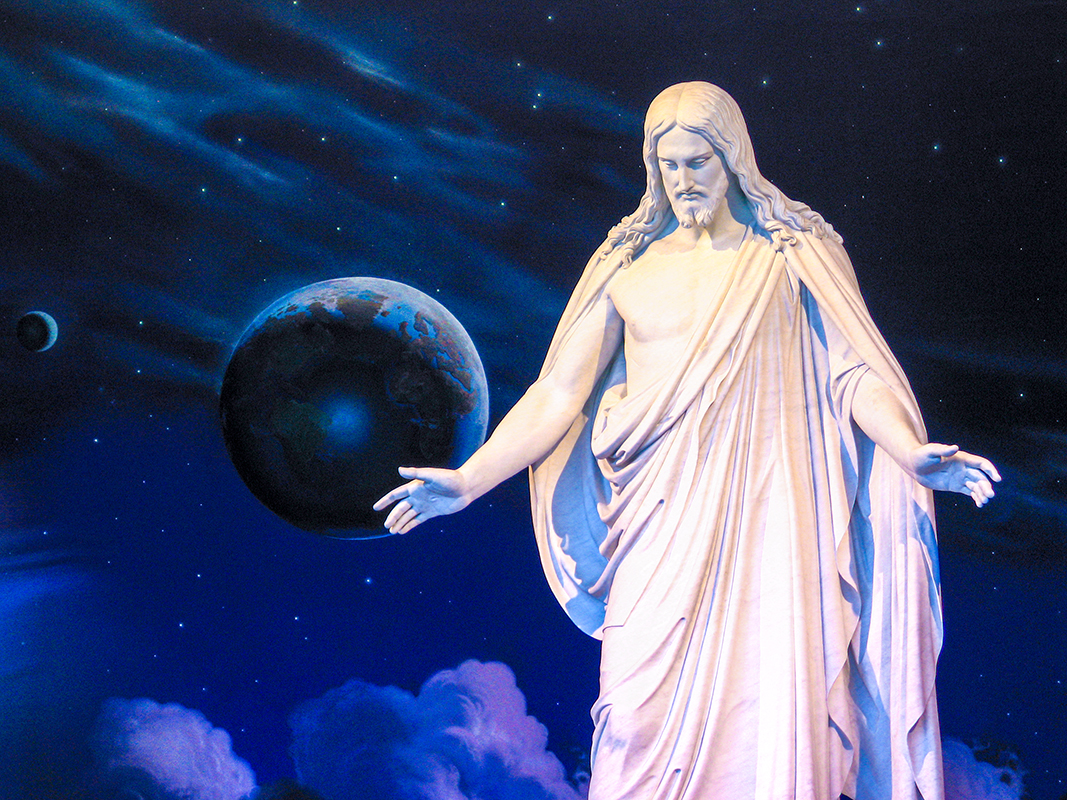
And finally in 2020, the logo was changed to include the picture of Christ:


Also, we should mention that President Nelson has recently urged us the importance of using the full name of the Church -- as "Jesus Christ" is the most important aspect of our name.

So, yeah -- Jesus is the center. But have you ever stopped to wonder why this is?

Like most Christian denominations, we believe in the Godhead. There is the Father, the Son, and the Holy Spirit.

The Father is -- well -- the one at the top. Without Him, nothing could exist at all -- not even the Son and the Holy Spirit. Sounds kinda important. I can think of at least one denomination that puts the Father at the center.

The Son is the one who came down to Earth as Jesus.

And the Holy Spirit is a spirit or influence whose identity is unknown.

Each of the three serve an important aspect. Remove any one of them, and we're toast. Like I said above, take away the Father and no existence. Take away the Holy Spirit, and we lose our spiritual connection to everything. But what about the Son?

To us, the Son, or Jesus, is the most important, because He is the one who paid the ultimate sacrifice so we can return to heaven where the Father dwells. Without the Son, we would still exist, and we would have our spiritual connections, but then we would doomed to spend an eternity in hell. With nothing to save us from even our tiniest sins, we would never be worthy to enter heaven.

However, Jesus does exist, and he chose to pay the price of our sins so that we can become worthy, become perfect, and enter into heaven.

So, it's not that Jesus could exist alone, and the Father and the Spirit are not so important. But rather, it's that of all the things and aspects of our religion to consider, to us there is nothing nowhere near as important as understanding this atonement -- what Jesus did for us, and what we need to do to receive this gift. Because without this one thing -- nothing else matters to us.

In other words -- we must first do what it takes to ensure our own salvation -- believing in Christ and following His counsel -- and only then should we need to worry about all the other aspects and mysteries of God. And as we learn these other things, we will need these constant reminders as to what should always remain at our center -- because without shoring up our own salvation, nothing else matters. If we keep our eyes on the prize, we can and will succeed.

What are your thoughts -- why is it so important to keep Christ at the center?

Sunday, February 12, 2023

The Adventures of Elder Elder and Elder Benjamin: Lost in Taegu


Lost in Taegu


March 4, 1990


The day had come to an end, and the four of us stopped at a small convenience shop near our apartment. 

Elder Johnston, “We have 15 minutes, so get only what you need.”

I grabbed a couple of Choco Pies — the good kind. They're similar to our American moon pies, but in some ways better.

Elder Benjamin picked up a bottle of Canada Dry seltzer water, which was strange for two reasons. Number one: after almost two years, it was the first time I saw Canada Dry in Korea, and number two: it was usually used for mixing drinks, and we weren’t allowed to drink. A customer gave us a funny look.

“Elder Benjamin, are you sure you want that?” I asked.

“Um yeah. I love Canada Dry. I can’t believe they got it!”

“Isn’t that a picture of a cocktail right there?”

“It doesn’t have alcohol, so I’m buying it.” He took it to the cashier, who also gave us a funny look. Elders Johnston and Riley looked at us from a distance, but they were too far away to know what was going on. What they didn’t know didn’t hurt them. 

Later on, Elder Benjamin would report, “Yuck. This tastes nothing like ginger ale,” and we would have a good laugh.

The cashier rang up my Choco Pies. So cheap and yummy! The other two elders were still picking out their needful things. We were faster than them. Heh!

I grabbed my bag, Elder Benjamin grabbed his, and he said, “Hey, check out that guy who just walked in.”

A skinny lonely-looking guy in his late 30s walked toward the back of the store. “What about him?” I asked.

“I’m going to go talk to him.”

“What? Why?” It was almost time to go. The other two were headed our way, about to ring up their purchases.

Elder Benjamin made like a bee toward the skinny guy, and the cashier gave him another funny look — a little miffed that he was going the wrong way out of the store?

Elder Johnston looked over at the cashier and then over at Elder Benjamin with a sense of alarm. He asked me, “What’s he doing?”

“He’s going to talk to that guy back there.”

“Oh, no he isn’t.” He rushed a little closer to Elder Benjamin. “Hey, let’s not bother the customers. This isn’t the place. We’ll get in trouble.”

Elder Benjamin ignored him and pursued the customer a little faster. He waved with a big smile, saying in Korean, “Hi! I’m Elder Benjamin. What’s your name?”

At first the skinny guy shrunk back, but then his face brightened. “My name is Nam Do-gyon. Are you a missionary?”

“Yes, I’m with the Church of Jesus Christ of Latter-day Saints.” At this point, Elder Johnston backed off. There was now no way to stop the interaction without creating a more embarrassing scene.

“I can see that,” said the skinny guy with a very soft and shy voice, pointing to Elder Benjamin’s name tag. “I’m a poet.”

“A poet?”

“Yes,” the man said in English. “I speaky little English.”

Elder Benjamin also switched to English. “Wow. That was good.” And then back to Korean. “Where did you learn English?”

“At school. And I’ve also tried to read a few books. But it's harder to speak. Do you happen to teach English?”

“Sure,” said Elder Benjamin. “Would you like us to come teach you? We can also teach a little about our church while we’re at it, if you’re interested.”

“That sounds like fun. Will you give me your business card? I can call you and invite you over to my place.” Koreans were really big on business cards. Most of them carried several everywhere they went, even if they didn’t own a business.

Elder Benjamin reached down into his kabang and pulled out a paper-back Mormon Gyeong — dark blue with a lightly laminated cover. He wrote his name, my name, and our phone number on the front page and then handed it to Do-gyon. “Here’s a gift. You can read this book and we can talk about it, too.”

Do-gyon took the book, and said, “Thanks. I’ll give you a call.” Then they shook hands.

While Do-gyon continued his shopping, Elder Benjamin returned to the three of us waiting at the door, smiling his usual crazy grin. The cashier shot another nasty look at us.

As we left, Elder Johnston said, “You have a unique style, Elder Benjamin.”


March 5, 1990


Do-gyon wasted very little time. He called us the next day and set up an appointment for the coming Friday evening. The plan was to do a quick English lesson, and then we would present a quick presentation on our church — in English.

He gave Elder Benjamin directions. Ride bus 175 to its very last stop, head west, and then when we saw a collection of houses, we would turn right and find his road.

Seemed simple enough. Little did we know what awaited us.

As the phone call came to an end, Elder Johnston gave us a thumbs-up. He still couldn’t believe that we had gotten a Discussion out of such a goofy introduction.


March 9, 1990


Our appointment was for 7:30PM, so the sun had already set, and it was getting darker. We got off the bus when the rest of the people did. A cool breeze welcomed us outside.

First step: head west. We thought we had a good sense of which way that was. The bus had taken us to a north-western sector of the city, next to a large industrial area. So, we kept going in the same direction the bus had been going.

Along the way, there were a couple of houses here and there, but not really any “collection” of houses. In the dusk, it was hard to see too far away. After about five minutes of walking, we finally came to something like a collection, and turned right.

Next step: find Do-gyon’s road. After another five minutes, we saw no other houses or connecting roads, and we came out into a big open area — the industrial section of town.

We had clearly taken a wrong turn.

“Well, Elder Elder,” said Elder Benjamin. “Do you see any houses anywhere near here?”

“No. It’s too dark. And look. It’s already 7:30. Any ideas?”

Keep in mind that we had no cellphones. There was no way to reach out to our investigator, and no pay phones anywhere in sight.

“Let’s go back and try again,” he said.

And so we went. We got back to the collection of houses, and I asked, “Are you sure he said to turn right? Maybe he meant left?”

“It’s worth a try.”

So we went the other way. By this time it was getting too dark to read road signs. We passed several streets, but from what we could make out, none of the names matched. This is when we realized we should have brought flashlights.

After another ten minutes of useless searching, we decided to give up. We went back to the collection of houses … however …

“Is this the same collection of houses where we go back?” I asked.

“I’m not sure. I forgot to count the streets.”

“Heck.”

Elder Benjamin said, “Let’s keep going down this road back to the open area. Then we’ll see where we are and where we’re going.”

“That sounds like a good plan,” I said. “Then we can head south and east until we find a bus stop.”

Our watches now said 8:00 and the coolness had dropped to a piercing chill. The wind cut through our trenchcoats.

The road took us back to the open industrial area. As we left the trees, and walked out into the open, there were no signs of residential life — no bus stops, no houses — not even the usual busy sounds beyond a distant rumbling. Just factories and parking lots.

The street lights were too bright for us to see the North Star, so we had to guess which way was southeast. We figured it was to our right — toward where we had come. We saw a tree line in that direction, and followed it, thinking we’d come back to something we’d recognize.

In hindsight, that decision had probably taken us in more of a northeastern direction, taking us deeper into factory territory, and further away from the bus stops.

“I can’t believe we messed this up,” said Elder Benjamin. “Do-gyon’s gonna be mad at us. We stood him up.”

“We’ll tell him the truth,” I said. “We got lost.”

“It’s not just that. This is just like my birthday, when we were in the middle of nowhere. They’re going to split us up this time. Do you think we can get back before 9:30?”

I looked at my watch, holding it just right in the ambient light. 8:26. We had just over an hour left, and still no signs of bus stops ahead of us. “Maybe. It’s going to be close.”

We continued walking through what appeared to be one large empty parking lot with factories sprinkled here and there. Did no one work this late on a Friday night? At which one did our lonely friend from the boonies work? If most people rode buses in this city, why were there such large parking lots?

As the temperature continued to drop, Elder Benjamin said, “I could certainly use a flaming pillar of fire right now.”

I laughed. “You know — it’s funny. You’d think if God were leading the people of Moses like that, they would have gotten to the Promised Land a lot sooner?”

“They went the way God wanted them to go.”

“If they were following instructions, wouldn’t God reward them? What if the pillar of fire was a comet in the sky, and they didn’t know the right way to follow it?”

Elder Benjamin stopped, so I did, too. He was going into spiritual mode, his face emanating uber seriousness. “But they weren’t following instructions. They rebelled all the time. Always complaining. They received bread from heaven, and they still complained. Remember that God told them the older generation wouldn’t make it into the Promised Land? They needed time so that the younger generation would get old enough to take over. God led them where he wanted them to go.”

I laughed again. “So, God wants us to be lost right now?”

“Maybe.” He always stared into nothingness when he waxed spiritual. “Perhaps one of the Three Nephites will visit us and lead us in the right direction.” He started walking again, so I followed.

“The Three Nephites?” I said. “Really? I don’t think so.”

“Think about it. They asked Jesus to allow them to tarry on this earth until He returns. They could be anywhere.”

“Weren’t they taken back up during the Great Apostasy?” I asked.

“No.” He looked at me with a face that told me I was about to be corrected. “They’re still on the earth, as to take them up would contradict what Jesus had promised them. The Book of Mormon only says they were removed from the land of Zarahemla because of the wickedness of the people. But they’re still here, and they can appear to any of us at any time. They can even look like someone else.”

“Wait — they can change their faces? I’ve never heard anything like that. Besides, they’d never waste their time on us. Don’t they have more important things to do?”

“You never know,” said Elder Benjamin as he stopped again. “My Grandmother plays the violin. When she was young, her dad told her to go practice outside because it was terrible. So she sat on the front porch, holding her violin, crying. A perfect stranger saw her, walked up to the porch, and asked to see the violin. He played it masterfully — the most beautiful melody you’ve ever heard. Then he handed it back and said, ‘Keep it up and you can play like that.’ And she did. She even got to play in the Utah Symphony.”

“Wow.”

“Yeah. I think it was one of the Three Nephites who visited her.”

I rolled my eyes. Another one of those crazy stories that wasn’t helping us get home. “Well, I don’t see anybody at all right now. Just empty factories and parking lots. It’s 9:00, and we have 30 minutes to get home. We’re not going to make it. It’s already too late.” This time I was the one to start walking.

But he didn’t follow.

“Wait, there’s one thing we haven’t tried,” he said. “Remember the Liahona? It pointed the way for Lehi to go only by the faith of the people.”

“Well, we certainly won’t make it back if we don’t keep moving. I have faith. We’ll find the way. I can feel it. Let’s go.” I pushed forward and again he didn’t follow. 

I turned around, sighing, and was ready to lecture about faith in action, but then Elder Benjamin said simply, “If we ask, God will point us in the right direction.”

How could I have forgotten one of the most basic principles? And it had not even occurred to me. “A prayer?” I said. “At this point, anything’s worth a shot. You want to go ahead and say it?”

In the middle of a massive parking lot, he went down on one knee, and I followed, the coldness chilling through my pants leg as it touched the ground. After a few seconds of silence, he started his prayer. “Oh, Father in Heaven. We are grateful for this opportunity to serve thee. And as you can see, we are lost. We made a wrong turn. Please forgive us of our shortcomings, and please show us the way. Please send us thy inspiration. Deliver us from this coldness. And if it be thy will, please let us get home on time. Please open our hearts, and our minds, so that we will be receptive of thy Spirit. And please bless Do-gyon. Let us have another opportunity to meet with him and teach him the gospel. With thee, anything is possible. We know that thou can deliver us, and show us the way. We ask these things in the name of Jesus Christ, Amen.”

I answered, “Amen,” and then we got back up. I looked around, and said, “Okay. What comes next?”

“Shhh. Just listen,” he said.

I heard the wind blowing, picking up, cutting through our overcoats again. I heard silence in the wind. No cars, no signs of humanity. And then there it was — an overwhelming sense of comfort. Everything was going to be all right. I said, “I think we’re going to be home by 9:30.”

Elder Benjamin said, “Look behind us.”

It was impossible, but there it was. Headlights coming our way!

“How in the world?” I said. “Who would be travelling here at this time of night?”

“We asked,” said Elder Benjamin. “And God has delivered.”

Well, only if the car stopped for us. I wondered: the car had to have already been on its way before we said our prayer. What if we had not said it? Would the car still come? Would they see us? Perhaps the prayer helped alert us to the car’s presence — behind us? Now, Elder Benjamin was waving it down, and it did seem to be correcting its path to come directly toward us. Still, God had to have known beforehand when we were going to say the prayer. Perhaps one day we’ll understand how it all works. But one thing was for sure. God certainly seemed to listen to Elder Benjamin.

As the car got closer, we saw that it was actually a bus. Number 256-1. One I wasn’t familiar with. I knew of 256, but not 256-1. We really were in a strange place. The bus came up to us and stopped, and the front door opened. 

We stepped in, and Elder Benjamin took point. I was too dazed to think. The bus driver was a happy old man, and behind him across the aisle, sat an old lady minding her own business. The rest of the bus was empty.

Elder Benjamin said to the driver in Korean, “Thanks for stopping. We’re lost. Which way are you heading?”

The driver answered, “I’m going home. Where are you going?”

Elder Benjamin told him where our complex was, and the driver said, “I’m going right past there, so sit down and I’ll take you there.”

We tried to put bek-won coins into the box (their version of quarters), but the driver wouldn’t let us. “I’m not on duty. It isn’t necessary. Come on. Sit down and we’ll go.”

We sat down behind him, and I looked at my watch. 9:10. We were going to make it!

Across the aisle, the old lady smiled at us, and then turned to look out her window as the bus started moving.

In our seat, I sat next to the window, and Elder Benjamin had the aisle. He smiled and said to me in English, “See? We asked and we received. But the night isn’t over yet.” Of course. I should have known what was coming next. I was just thankful that we were on a bus going home, and part of me wanted Elder Benjamin to leave the nice bus driver alone. After all, he was giving us a free ride. But one thing I had learned: Elder Benjamin will do what he does, and there’s no stopping it.

He turned to the driver. “Thanks for taking us home. What were you doing in this area? Buses don’t run around here.”

The driver laughed heartily. “Taking a shortcut.”

I did the math in my head — calculating the odds of this being true.

“Have you been driving buses very long?” asked Elder Benjamin.

“Not really. This is just something I wanted to do after a long life.” The man constantly exuded incredible happiness. “What do you two gentlemen do?”

“We’re missionaries,” said Elder Benjamin. “From the Church of Jesus Christ of Latter-day Saints.”

“Wow. That’s an impressively long name. Tell me more.” It was at this point I realized he wasn’t going to throw us off the bus.

Elder Benjamin talked briefly about how we came from the US, living in Korea for two years to share our message. And he worked his way toward the Book of Mormon, as we were behind our goals of handing them out. The driver seemed to be very interested in the people of the book: the Nephites and the Lamanites. The old lady continued smiling, staying out of the discussion.

As we neared our stop, Elder Benjamin went in for the kill. “We’d like to present this book as a gift to you. Please receive it.”

And then the driver said, “No, no. I don’t need it. I’m okay.”

“It’s okay,” said Elder Benjamin. “It seems you’ve enjoyed our discussion, and we have a lot of these. Please take it.”

And again, the driver held up his hand. “No. I’m sure it’s a good book, but I don’t need it. You can give it to someone else.”

Elder Benjamin looked to me. A puzzled face asking me to say something. I wasn’t sure what I could say, and asking a third time seldom worked, but it was worth a try. I said, “We have to give you something for your kindness.”

Then the driver then said, “Okay. I’ll take it,” and he held out his hand behind his back.

Elder Benjamin gave him the book. “Okay. Here you go. I’ve written our number in there. So if you have any questions, you can give us a call. We’d love to hear what you think about it.”

This whole time, the old lady kept up her smiling. She was listening. Elder Benjamin handed another book in her direction, and she raised both her hands, shaking her head. Then Elder Benjamin put the book back in his kabang.

“You are working very hard,” said the bus driver as we neared our stop. “Thanks to you both for serving the Lord. And may you receive many rewards.”

We got that a lot from people who were already Christian, and who had already decided not to join our church — saying something nice to appease us. He might as well have said, “Nice try. I’ll call you. Don’t call me.” And it was a shame. He did seem interested when Elder Benjamin talked about our church. You can’t always satisfy everyone.

The bus driver opened the door for us to exit, and we said thanks. We waved as we exited, and he waved back. 

We walked around the back of the bus so we could cross the street from behind. That’s what people did in Korea — never cross in front of the bus. 

However, we didn’t hear the bus leave just yet. Was the driver finishing up paperwork? Waiting to see we crossed the street safely?

With the bus behind us, Elder Benjamin said, “This had to be God’s doing. This man was inspired to show up when and where he did, and to be an answer to our prayer. God knows everything and he will always provide a way.”

“Yes,” I said. “There’s no way he drives that way every …” and I turned around. The bus was gone. “Whoa!”

“What?” said Elder Benjamin. He also turned around. “Where did the bus go?”

We looked down the road, which stretched ahead of us at least half a mile, and there was no bus.

“That’s impossible,” I said.

“No,” said Elder Benjamin. “It happened.”

And somehow we knew the bus driver would never call us back.


Next Adventure: The Last Visit
Sunday, January 29, 2023

Analyzing the Apostles' Creed


Recently, my good friend asked me, "Does your church believe in the Apostles' Creed?" So, I figured -- this is a perfect time for an analysis. Yay! Put on your seatbelts and enjoy the ride.

As a general rule of thumb my church does not believe in the call and response tradition we see in many Christian churches. This is where the pastor reads from a script, and at the appropriate time the congregation responds. I saw this when I went to an Episcopalian summer camp. They have a book of prayers, and also a calendar as to which prayers need to be read on a specific day.

Much of the material comes straight from the Bible, but some pieces were created after the genesis of the original Church. These are summaries and commentaries based on scripture, which may or may not be in harmony with the original scriptures. My Church doesn't recognize any of these later artifacts, mainly because they didn't exist with the Original Church (first century).

My church also sees these call and response traditions as "vain repetitions" (Matthew 6:7). The concern is that if you keep repeating the same words, they may become meaningless sounds recited by rote. So, instead of call and response, the standard Latter-day Saint church service concentrates on discussions and instruction that apply to our everyday life.

As for creeds, the closest we have is a set of 13 Articles of Faith. We're supposed to know them, but even these don't get recited in our church services. Knowing them is not a prerequisite for salvation, but they do serve as a good summary to help guide us in our paths.

What this all means is that most Latter-day Saints don't know the Apostle's Creed exists. It's not from the Bible, and didn't show up regularly until somewhere around the 3rd to 5th centuries. I only knew of this creed from visiting Episcopalian and other church services. And I do have to admit that today I've learned more about this Creed in a one-hour research session than I have in my entire life. For example, I didn't know that it has 12 lines, each one supposedly coming from a different apostle.

So, here goes -- let's see what the Creed says ... (I'm using the version presented in Wikipedia, though I see in that same article that slightly different versions also exist) ...
#1) I believe in God the Father almighty, maker of heaven and earth,
Yes -- we believe this. There may be some nit-picky differences in details, but in principle this is correct. Where we might differ: we believe that Jesus (the Son) was already in existence at the time, and that He helped the Father to create our world.
#2) and in Jesus Christ, his only Son, our Lord,
Yes -- and again there are tiny details. The Father is Elohim, and the Son is Jehovah, the last of which is often translated as LORD in the Old Testament. Though the term LORD and GOD can be interchangeable between the two entities, we tend to use LORD to refer specifically to Jesus (the Son).
#3) who was conceived of the Holy Spirit and born of the Virgin Mary,
#4) who suffered under Pontius Pilate, was crucified, died, and was buried, 
#5) descended into hell, rose again from the dead on the third day, 
#6) ascended into heaven and is seated at the right hand of God the Father almighty, 
#7) who will come again to judge the living and the dead.
These are all straight from the Bible -- so yes, this is all true. In fact, each of these are very important aspects of Jesus that should always be remembered. I should point out that so far, any member of my church would be in full support of all these lines, and we're taught all this in our youth.
#8) I believe in the Holy Spirit,
Yes -- and I should further point out: my church sees the Father, the Son, and the Holy Spirit as three distinct entities, one in purpose. The Apostles' creed seems to support the idea that these three are separate in being -- though I suppose it could also apply to the Trinity concept as well (where the Three are different manifestations of the same being).
#9) the holy catholic Church, the communion of saints,
This one is kinda funky, because it has that "catholic" word in there. It threw me off the first time I ever read this, but then I learned the word "catholic" is lower-case, meaning "universal." In fact, that's where the name of the Catholic Church comes from. It is supposed to be the One True Church that is the same here, there, and everywhere.

We believe in the One True Church as well. But of course, you'd probably guess that we disagree as to the identity of that Church. (What good is a church that doesn't claim to be that One True Church?)

But then again, all of our many denominations branch from the same Original Church of Jesus Christ. We can't logically all be "right" with all our differing nit-picky points of views, but in our fundamental beliefs, we are probably more than 95% in sync. The One Truth is indeed eternal and "catholic," and each of our churches are given a portion of that Truth. We all have the same core beliefs.

The second clause is also very important. Some believe that we don't need church, but rather just a relationship with God. However, my church teaches that this relationship is nothing without our relationships with our fellow friends and family. The "Church" is US, under the direction of God. We meet together, learn, and help each other. And this is the "communion of saints." 

One more minor detail -- I see "saints" here being defined as "followers of Christ." This is the same meaning of the word in "Latter-day Saints." Thus we can see that even in the name of our church, the concept of Church and communion is very important to us.
#10) the forgiveness of sins,
#11) the resurrection of the body,
Again, these are core Christian doctrines straight from the Bible. So, yes. About the resurrection, we believe that this is a literal, physical resurrection, and not figuratively.

And finally ... 
#12) and the life everlasting. Amen.
Most definitely -- we see our goal in life is to obtain the life everlasting that Jesus has promised.

In summary, even though most Latter-day Saints don't know what the Apostles' Creed is, they'd most likely believe its precepts. They'd probably get stuck on #9 with that "catholic" word, but when the meaning is explained, they would then nod their heads in agreement. Some nit-picky differences exist in the periphery, but in principle, this Creed may indeed be a good representation of the core doctrines that unite ALL Christian denominations.

For comparison, I invite you to check out our 13 Articles of Faith. In particular, the first 4 are very similar to the Apostles' Creed.

I hope you've enjoyed this quick analysis. In a couple of weeks, I'll release the next installment of the Adventures of Elder Elder and Elder Benjamin. Until then, keep on searching for truth!

Sunday, January 8, 2023

Learning New Things


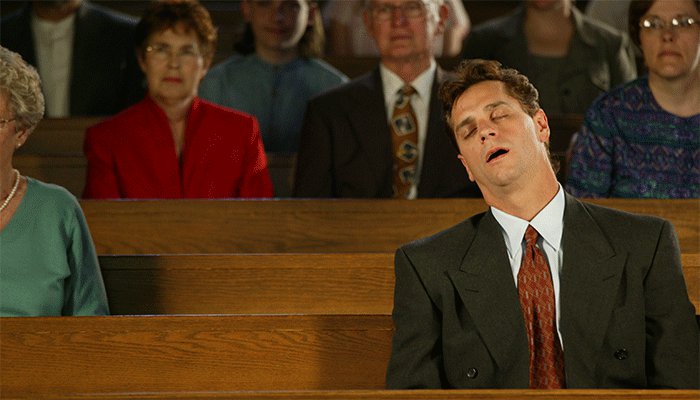
My biggest struggle in Church -- especially Sunday School -- is staying awake, because I rarely hear anything new. Part of this comes with being a genius, learning things quickly, and retaining much. I'm always striving to learn new things and keep my brain going. But church is more about the interactions and repeating the obvious over, and over, and over, and over again. This is because most of us (including me) need this.

The scriptures tell us every now and then about the mysteries of God and how we can learn them. Often I wish: why can't we learn these gems in church? I could take it -- the "real" explanations as to what's going on. But all too often we hear: "our minds are too small to understand how God operates, so we shouldn't worry about it." But that's not what the scriptures say. The mysteries CAN be known. Our minds have plenty of capacity to understand a lot. All we need is to be told, and we'd likely understand it. In my own vivid imagination, I've come up with plenty of theories (science fiction), but no way of knowing if any of it is true.

We're unlikely to learn these gems in church, because most people are not ready. There are always people newly converted, or those who are satisfied with what they know. And when someone does wax wise about one of these mysteries, it often sounds wrong -- as if they had made it up, and it becomes an awkward moment. For this reason, church will always be about the lowest common denominator.

Plus, knowing the mysteries of God is not a requirement of salvation. I don't think ANY Christian church teaches this. That's why church is often about the basics. And I must admit, many of us are still struggling with the basics -- the main reason why we must be constantly reminded.

But man -- I want to know these mysteries. Partly because I'd like to know what to say to investigators who ask the tough questions, and partly because I just want that knowledge. Give me more!

However, I'm learning that with what we already know, it is very easy to lift ourselves up in pride. The only reason I shut down in church is because I believe I can't learn any more. I fall asleep, and ironically miss stuff I need to hear.

And this is where my church's recent "Come Follow Me" program comes into play. We have completed four full years in this program, and we're now starting the fifth one. Each week, the whole world of Latter-day Saints concentrates on a specific reading assignment. In our first year, we did the New Testament. The next year featured the Book of Mormon. And then Doctrine & Covenants with Church History. And finally last year we did the Old Testament, finishing up our Standard Works. This year we restart the cycle with the New Testament.

The Church provides a rather small manual to help guide us each week. But then Biblical and religious experts from all around the world chime in and create their own videos. Some are illustrative, explaining the narratives of the stories. Some are all-out discussions diving deep into how people of the times would interpret certain scripture and prophecies. In other words, there is a plethora of discussion arising from this program.

With my busy schedule, it's very difficult to dive into these videos, but my wife does so, and she reports back to me some of the more juicy details. I'm always surprised to learn something new in the realm of basics -- often reminding myself that I need less pride and more listening.

For example, last year, I learned for the first time that Nineveh was an enemy state to Jonah. Up until 2022, I had thought that city was another Jewish community that needed saving and couldn't understand Jonah's reactions. But knowing that Jonah wanted them to die from the get go -- it all falls into place. It's knowledge not exactly pertinent to my salvation, but it helps me understand Jonah a lot more, making it easier to understand its lessons.

This year, even though I'm a little dismayed at going back to material we've already gone over, I've already learned something new this past week about Matthew 1. When Matthew lists the generations to Jesus' father, and points out the 14 / 14 / 14, it turns out that he may have skipped a couple of kings/fathers in an attempt to force the 14's to work. He was just being some weird numerologist (like Bach was), trying to find importance in a world of math that he understood. It is another reminder that our scriptures are written by humans and will thus have many of these types of small imperfections. Knowing this can help us understand better what's important, and what's just interesting.

Either way, we could all do better learning new things in church. Because we'll never run out of things to learn. We can all have faith, pay attention, and possibly even stay awake.

Sunday, October 23, 2022

Who Are The Chosen People?


In our readings this year, we have recently finished the book of Isaiah. It's hard to believe this year is almost over, and I'm surprised to still be learning new things from the Old Testament.

For some reason, while reading Isaiah, I seemed to pick up on this whole concept of the Chosen People. It starts with Abraham, where God promises blessings upon his descendants -- that they should be as numerous as the stars in the sky. God also promises a choice land for His people.

Going down a couple of generations, it comes to Israel and his twelve sons, who then head the Twelve Tribes of Israel. Then the rest of the Old Testament follows what happens to this Chosen People.

Every time I hear the term "Chosen," the first thing that comes to mind is: why is there even a Choice People to begin with? Doesn't this contradict the doctrine of "God is not a respecter of persons"? (Acts 10:34)

I'm also surprised to see how rotten this group of people are throughout the Old Testament. God works miracles with them, but they always apostatize -- not even waiting a full generation. Sometimes they are "good" with good kings or judges, but most of the time, they're the ones following idols and sometimes being worse than their neighbors.

But yet in Isaiah, even with the anger against Israel, he states that God's hand is still outstretched. And this is important ...

... They are still the Chosen People. When they turn to good, God is ready to support them.

Now that we're in the Jeremiah books, we'll get to see what happens next: the scattering of Israel, where ten tribes will become lost, and two will remain. Eventually, the descendants of Judah will reject and have their own Messiah crucified.

So, why them? What about most of all the other people in the world, like me (Gentiles)? I can't help that I was born outside of their group. Why am I not Chosen?

In some cases, it seems that God really is being a respecter of persons. For example, in the New Testament, Jesus made it a point to administer only to the Jews (including the Samaritans). It was only at His death that the Gospel was opened up to the Gentiles. At one point during his ministry, a Gentile says "yet the dogs eat of the crumbs which fall from their masters' table." (Matthew 15:27) So, are the rest of us just sloppy seconds?

But then I notice that a Chosen People needed to be established near the beginning so that the true Gospel could eventually be revealed and established more permanently in the world. Because of apostasy throughout the world after the Flood, this was a strategy to shore up Truth for generations to come. It would take a couple of millennia to come to full fruition into what we have today.

Some wonder if these people were chosen as some kind of necessary setup for the ultimate sacrifice to come. Only the Chosen People could reject their own, paradoxically helping to save us from our sins through the Atonement. According to as-of-yet unfilled prophecies, the Chosen will ultimately accept Christ in the last days. The First will be Last, and the Last will be First. Or in other words, the Chosen will be the Last to accept Him.

Some also point out that the promise to Abraham has been fulfilled. Throughout the Old Testament, the Chosen People have intermingled with their neighbors. Simple math would show that chances are very high that we are all descendants of Abraham -- and also Israel. In this sense, we are literally one of the Chosen. We may be "watered down," yet we may have full access to all of the blessings promised to Abraham and his descendants.

I'm not sure if I've figured all of this out, but I figure God knows what He's doing.

Finally, I would like to close with thoughts about the Jewish people today. Some seem to forget that they are still the Chosen People. The Bible reminds us that those who fight against Israel will be punished, and will ultimately not prevail.

We should also be reminded that from a Christian standpoint, the Jewish belief system isn't necessarily wrong. They are just missing the additional information the rest of us have accepted. Their current existence as a people reminds us of our own heritage. In a strict sense, as Christians, we are also Jews -- that is, we believe in the same God of Abraham and Israel. We are held to many of the same commandments. The main difference is that we believe many of the parts of the Law of Moses have been fulfilled and replaced with a Higher Law.

Today's Jewish people have preserved much of their own traditions, of which we can learn plenty. So, in the coming days, we must remember to be friends, help them out, encourage them, work together, and learn. Because in the end, we will all be one again.

So, what are your thoughts? What do you believe about the Chosen People?

Sunday, September 4, 2022

Proverbs: Knowledge and Wisdom


This past week, our Old Testament reading included Solomon's Proverbs. So, today, I'd like to talk about Wisdom and Knowledge.

The Bible tells us that Solomon was the wisest man who ever lived, or who will ever live:
And God said unto him, Because thou hast asked this thing, and hast not asked for thyself long life; neither hast asked riches for thyself, nor hast asked the life of thine enemies; but hast asked for thyself understanding to discern judgment; Behold, I have done according to thy words: lo, I have given thee a wise and an understanding heart; so that there was none like thee before thee, neither after thee shall any arise like unto thee.
The first time I read that, I rolled my eyes -- yeah right. But that was his reputation. Super wise, such that he attracted kings and queens to come visit.

The book of Proverbs talks about Wisdom. But it also talks about Understanding, which is sometimes used interchangeably with Knowledge. Solomon seems to place Wisdom first over everything else.

To me, Knowledge is facts. Like knowing 1 + 1 = 2. As a "scientist," actuary, programmer, mathematician, etc., I have a LOT of knowledge. I could explain a myriad of topics on statistics, probability, science, and math, where I see people struggling every day. But I find most of the time, others don't want to hear it.

This is where Wisdom comes in. You don't need to have Knowledge to be wise. You just have to simply learn to rely on the experience of others. You must realize that you are most likely wrong somewhere in your own belief system, and you should be willing to maintain an open mind so that you can happily receive correction.

Solomon goes through all this in his Proverbs. Check out these verses:
Wisdom is the principal thing; therefore get wisdom: and with all thy getting get understanding. (Proverbs 4:7)
Reprove not a scorner, lest he hate thee: rebuke a wise man, and he will love thee. Give instruction to a wise man, and he will be yet wiser: teach a just man, and he will increase in learning. (Proverbs 9:8-9)
Happy is the man that findeth wisdom, and the man that getteth understanding. For the merchandise of it is better than the merchandise of silver, and the gain thereof than fine gold. She is more precious than rubies: and all the things thou canst desire are not to be compared unto her. (Proverbs 3:13-15)
In other words, a wise person is not only willing, but actively seeks out Knowledge. And this Wisdom has much more value than silver, gold, and rubies.

I invite you to check out my post (or video) on Belief Systems in my "Always Be Better" series, where I go into more details about our belief systems. Near the end of the post -- I touch on how to constantly improve our own Knowledge.

But while Wisdom can give us great power of understanding, and lead to much success, there is one important thing to point out...

If Solomon was indeed the wisest person who ever lived and will ever live, it didn't seem to do him much good at the end. He allowed his wives to turn him toward idols. He then ended up losing most of Israel, and had many enemies. But the Bible is silent about his final state -- did he repent as his father did from his mistakes?

Either way, it seems that Wisdom, alone, is not enough. We must also remember Faith, Charity, Love, and all other good traits. From my own experience, the smarter and wiser I get, the more I come to realize what I don't know. No one person can know everything, so that's why we must rely on other tools in our own quests for salvation.

Sunday, August 21, 2022

Visiting the Psalms


This month our Old Testament reading is covering the Psalms. So -- yes, we're in the "poetry" section of the Bible these couple of months.

In some respect, the Psalms represent one of my favorite aspects of the Gospel -- music. I know, I'm biased, being such a musical guy, but the Bible seems to be clear on this topic. We are encouraged to sing -- and not just nice and pretty soft music, but also praiseful music as well. It is all considered to be sacred, connecting us with God and the angels. And if you sing well enough, the angels will even join in -- something I've experienced at least once in my life.

David's strength was music. In his humble beginnings, Saul, the King, took David into his court (somehow oblivious to the fact that David had already been anointed to be king, himself). Whenever Saul was troubled, David would play his harp and sooth Saul's soul.

Music can be very powerful!

I often wonder how David's singing sounded. I'm certain the scales are different from what we use today -- but would it sooth our souls? Or would one have to be already accustomed to that kind of music. As a musician -- I would love to hear a live recording, but alas -- all we have are the lyrics.

As far we know, it could have sounded something like this ...


So, what do the Psalms teach us about music?
I will ... sing praise to the Lord most high. (Ps. 7:17)
Praise the Lord with harp: sing unto him with the psaltery and an instrument of ten strings. Sing unto him a new song; play skilfully with a loud noise. (Ps. 33:2-3)
Sing aloud unto God our strength: make a joyful noise unto the God of Jacob. Take a psalm, and bring hither the timbrel, the pleasant harp with the psaltery. Blow up the trumpet in the new moon, in the time appointed, on our solemn feast day. (Ps. 81:1-3)
Make a joyful noise unto the Lord, all the earth: make a loud noise, and rejoice, and sing praise. Sing unto the Lord with the harp; with the harp, and the voice of a psalm. With trumpets and sound of cornet make a joyful noise before the Lord, the King. (Ps. 98:4-6)
Praise ye him, all his angels: praise ye him, all his hosts. (Ps. 148:2)
... and so on. Music is very important in our quest to converse with God.

So, don't be afraid. Sing, praise, and enjoy.